Every landscape carries a personality. Ha Long Bay carries a memory older than language.
In the far northeast of Vietnam, where the Gulf of Tonkin folds gently into the land, Ha Long Bay spreads itself across the horizon like a half remembered dream. Water. Stone. Sky. And between them, stories. This is not merely a destination. It is an atmosphere. A Ha Long Bay tour is less about where you go than how slowly you learn to look.
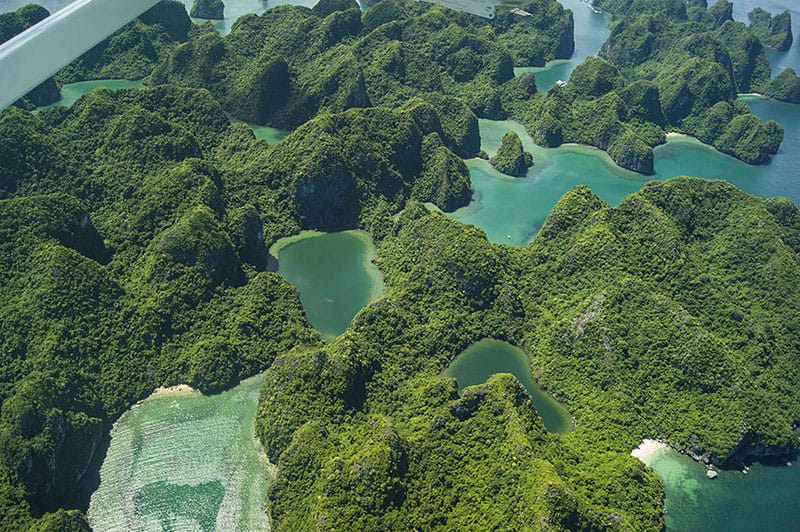
There are nearly two thousand limestone islands scattered across the bay. Each one rises abruptly from the water, steep sided and unapologetic, as if the earth itself decided to speak in punctuation marks. From above, they resemble a dragon’s spine breaking the surface of the sea. According to legend, that is precisely what happened. Dragons descended to protect the land, spitting jewels that became islands, forming a natural fortress against invaders. Myth or metaphor, it hardly matters. Standing here, belief feels reasonable.
Timing matters in Ha Long Bay, though it is forgiving. Located in northern Vietnam, the region experiences four distinct seasons. Spring arrives softly, with mild temperatures and a faint floral breeze drifting in from the mainland. Summer, from April to October, is the classic window. Warm, bright, energetic. The bay is at its most generous then, though occasional storms can roll through with theatrical flair. Winter months bring cooler air, mist, and a silvery mood. December, January, and February trade sun for atmosphere. The limestone towers loom larger through fog. Photographers understand this version of Ha Long Bay instinctively.
You do not visit Ha Long Bay so much as you enter it.
Most journeys begin with a cruise. A proper one. Not a hurried loop, but a slow unfurling. Boats slip away from the harbor, engines quieting as the bay opens out. Floating fishing villages appear first, homes tethered gently to the water, nets draped like laundry. Life here follows tides rather than timetables. Children paddle small boats with alarming confidence. Dogs nap on floating decks. The bay is not empty. It is inhabited.
Bai Chay sits along the shoreline, the main resort area, familiar, comfortable, sociable. Beaches stretch out, hotels line the road, restaurants glow in the evening. It is an easy place to rest, swim, and recalibrate. But Ha Long Bay rewards curiosity beyond the obvious. Those seeking silence should look outward, toward islands less visited, toward water that darkens and deepens.
Co To Island offers that escape. Reached by boat, it feels remote without being inaccessible. The beaches are pale and clean, the water inviting. Coral reefs sit just offshore, vivid and alive. Days here pass gently. Snorkeling in the morning. Long lunches. The kind of afternoons where the only plan is shade.
Tuan Chau Island, by contrast, leans into energy. It is the most developed island in Ha Long Bay and the only one with a permanent population. Resorts cluster here. Beaches are busy. Water sports dominate the daylight hours. Jet skis cut across the bay. Parasails lift tourists into the sky. Beach volleyball courts fill quickly. There is something invigorating about Tuan Chau’s refusal to be quiet. It offers motion, laughter, and spectacle. In the evening, Vietnamese cuisine is celebrated in a culinary complex designed in the architectural style of royal Vietnam from the seventeenth and eighteenth centuries. It is grand, theatrical, and surprisingly effective.
Then there are the caves. Ha Long Bay does not hide its secrets underground. It displays them.
The cave system here is vast, each chamber shaped by millions of years of patient erosion. Luon Cave, located on Bo Hon Island about fourteen kilometers from Bai Chay, is reached by small boat or kayak. The entrance is low and narrow, opening suddenly into a hidden lagoon encircled by cliffs. Stalactites hang like frozen drapery. The silence inside is profound. Even voices sound different here, muffled, respectful. Every formation invites interpretation. A dragon. A monk. A face. The imagination works overtime in the dark.
Beyond the bay itself, the land rises. Yen Tu Mountain stands inland, a sacred complex of pagodas, shrines, and ancient trees. This is not a casual stop. It is a pilgrimage. Yen Tu is associated with the Tran Dynasty and the birthplace of Vietnamese Zen Buddhism. The climb is steady, sometimes demanding. Stone steps wind through forest, past centuries old stupas, under towering pines and bamboo groves. The architecture is austere, elegant, reverent. At the summit, the view stretches far beyond the bay, a reminder that Ha Long Bay is part of something larger, something continuous.
Getting to Ha Long Bay is straightforward. From Hanoi, the journey by road takes three to four hours, covering roughly one hundred seventy kilometers. Buses depart regularly from central Hanoi, including from Kim Ma Street, with frequent services throughout the day. Travelers coming from Hai Phong, only seventy five kilometers away, have an even shorter route.
Once in Ha Long City, movement becomes fluid. Boats and cruises dominate. Taxis handle short distances. Buses connect neighborhoods. The rhythm shifts from land to water almost without notice.
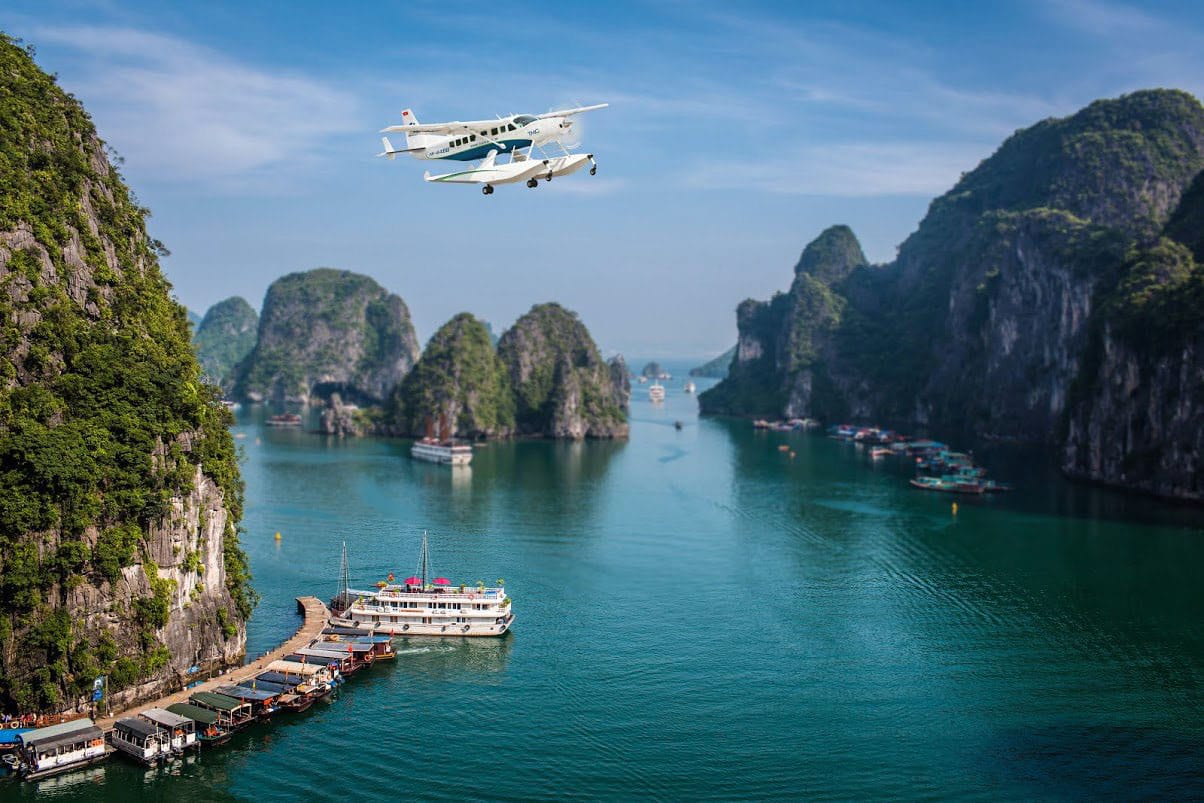
For those who value time and spectacle, seaplane travel offers an unforgettable alternative. Departing from Hanoi, modern seaplanes land directly on the water in Ha Long Bay. The aircraft seats a small number of passengers, ensuring wide windows and unobstructed views. From altitudes ranging between one hundred fifty and three thousand meters above sea level, the bay reveals its full geometry. Islands cluster and scatter. Channels snake between stone pillars. It is impossible not to feel a jolt of awe. This is Ha Long Bay announcing itself.
Accommodation options are extensive. From budget guesthouses to luxury hotels and overnight cruise ships, choices reflect every travel style. A night aboard a cruise transforms the experience. As day trippers return to shore, the bay quiets. Sunset stains the water copper. Dinner is served on deck. Morning arrives with mist curling around limestone towers. This is when Ha Long Bay feels most intimate.
Hotel features vary, but the best properties understand location and orientation. Sea facing rooms matter. Private balconies matter. Thoughtful dining, attentive service, and seamless cruise connections elevate the stay. The benefit is not luxury alone. It is ease. The freedom to focus on the bay rather than logistics.
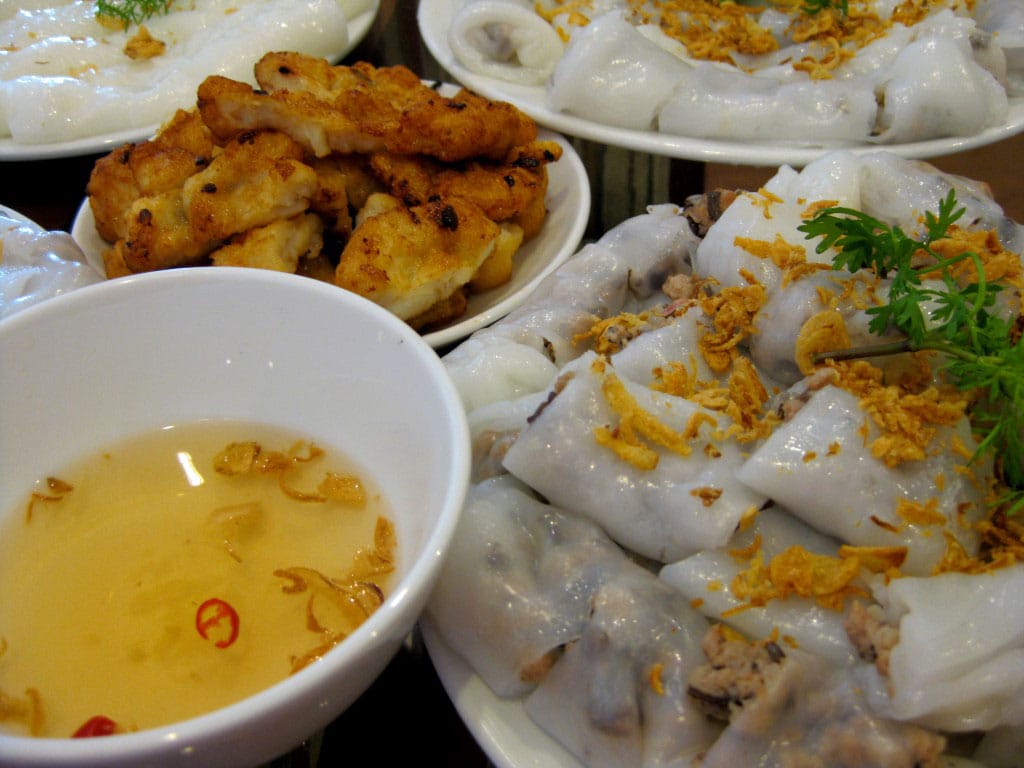
Food in Ha Long City is approachable and satisfying. Seafood dominates menus. Squid, shrimp, crab, clams, prepared simply, confidently. One dish stands apart. Steamed rice rolls served with fried squid patties. Soft, delicate, savory. It is a local signature and a necessary indulgence.
Shopping is unpretentious. Prices remain reasonable for a destination of this stature. Clothing costs slightly more than inland cities, but meals remain affordable. As everywhere, clarity helps. Ask prices. Confirm details. A little attentiveness goes a long way.
Boat pricing can be inconsistent, particularly at busy piers. Working through your hotel or cruise operator simplifies everything. Shared boats reduce costs and waiting time. Shorter cruises of three to four hours suit most itineraries, though longer routes reveal deeper corners of the bay.
Ha Long Bay is not just scenery. It is scale. Time. Perspective. It reminds you how small motion can feel monumental when framed by ancient stone.
Some places impress. Others linger.
Long after you leave, you will remember the way the water changed color as the light shifted. The silence inside a cave. The slow glide of a boat between islands. The sensation that the world, briefly, made sense.
That is the quiet promise of Ha Long Bay.
And once felt, it is difficult to resist.