
Inside 9 of the World’s Most High Tech Hotels
A Planner’s Perspective on Technology Driven Hospitality
Technology is quietly redefining the hotel experience.
Not long ago, check-in meant waiting at a reception desk and fumbling for a plastic key card. Today, some hotels operate more like experimental laboratories for hospitality design. Robots store luggage. Smartphones open doors. Sensors monitor privacy and temperature. Elevators even change music depending on how many people step inside.
For travelers, these features may sound like novelties. For travel planners, they signal something larger: a structural shift in how hotels operate, manage guests, and personalize service.
Across North America, Europe, Asia, and Australia, several hotels stand out for integrating technology directly into everyday guest experiences.
Below is a curated planner-style guide to nine high-tech hotels around the world, based entirely on the original destination data. The goal is not just to admire the gadgets—but to understand how they change the way travelers interact with their surroundings.
Quick Travel Summary Table
| Hotel | Location | Signature Technology | Guest Experience |
|---|---|---|---|
| Yotel New York | 570 Tenth Avenue, New York | Robot luggage storage | Automated check-in and moving beds |
| Blow Up Hall 50 50 | ul. Kościuszki 42, Poznan | iPhone room key | Electronic recognition entry |
| QT Sydney | 49 Market Street, Sydney | Musical elevators | Music changes based on passengers |
| theWit Chicago | 201 N State Street, Chicago | Body-temperature sensors | Automated climate adjustment |
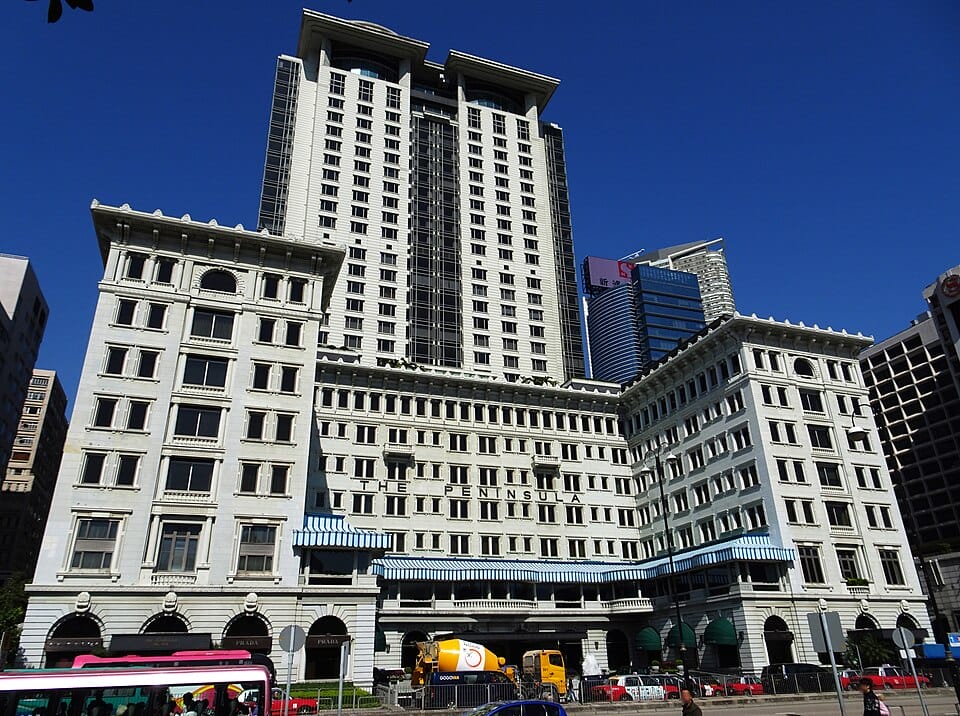
| The Peninsula Hong Kong | Salisbury Road, Hong Kong | Custom tablets | Smart room control |
| Ushuaia Ibiza | Playa d’en Bossa, Ibiza | Fingerprint payment | Biometric purchases |
| Hotel 1000 Seattle | 1000 First Avenue, Seattle | Infrared privacy sensors | Disturbance prevention |
| W Hotel Sentosa Cove | 21 Ocean Way, Singapore | Social media integration | Touchscreen gaming tables |
| The Magdalen Chapter | Exeter, England | iPad hotel operations | Paperless service system |
Yotel New York – Robots and Compact Engineering
Address: 570 Tenth Avenue, New York, USA
Yotel New York approaches hospitality with the efficiency of an airport terminal.
Check-in takes place at self-service electronic kiosks, removing the traditional front desk interaction entirely. Guests receive their room key digitally and proceed directly to the room.
The most striking feature is a large robotic arm that stores luggage. Instead of leaving bags with a concierge, travelers place them into a machine that automatically sorts and retrieves luggage on demand.
Inside the rooms, engineering focuses on space optimization.
Beds are motorized and can move to create additional room during the day. Walls are soundproofed. Air-conditioning systems operate through specialized sensors.
Even the restaurant, DohYO, integrates adjustable technology—tables can be raised or lowered depending on guest preference.
The hotel behaves less like a conventional property and more like a carefully designed living system.
Blow Up Hall 50 50 – The Hotel Without Room Numbers
Address: ul. Kosciuszki 42, Poznan, Poland
At Blow Up Hall 50 50, the experience begins with a small surprise.
There are no room numbers.
Instead of receiving a traditional key card, guests are given an iPhone preloaded with electronic recognition technology. The device guides the guest through the building and unlocks the correct room automatically.
The result is an intentionally mysterious navigation experience.
From a design perspective, removing visible room numbers shifts the hotel atmosphere away from a standardized layout toward something more personalized and experimental.
QT Sydney – Elevators That Play Music
Address: 49 Market Street, Sydney, Australia
QT Sydney demonstrates how even small design choices can shape guest experience.
Its elevators contain a playful technological feature: music changes based on the number of people inside.
For example:
-
One passenger triggers Elvis Presley’s Are You Lonesome Tonight
-
Two passengers activate Just the Two of Us by Bill Withers
The system detects occupancy and automatically selects songs accordingly.
This feature does not necessarily improve efficiency. Instead, it introduces an element of surprise—turning a routine elevator ride into a moment guests remember.
theWit Chicago – Rooms That Read Your Temperature
Address: 201 N State Street, Chicago, USA
At theWit Chicago, room temperature responds directly to the human body.
Specialized thermal sensors detect the guest’s body heat and automatically adjust the climate system to maintain comfort.
Communication with hotel staff is equally streamlined.
Instead of calling reception, guests can send direct text messages to staff members located nearest their room, reducing response time.
Public spaces also adapt to the time of day. Ambient sound systems shift the atmosphere with natural audio cues:
-
Birdsong during the daytime
-
Cricket sounds in the evening
The goal is subtle environmental immersion rather than visible technology.
The Peninsula Hong Kong – Tablet Controlled Rooms
Address: Salisbury Road, Hong Kong
The Peninsula Hong Kong integrates technology directly into the room environment.
Each guest receives a custom-designed tablet created specifically for the hotel. The device is pre-programmed with language settings suitable for international travelers.
Using the tablet, guests can:
-
Watch films
-
Search city navigation information
-
Control lighting systems
-
Activate “Do Not Disturb” signals
-
Request room service
Wall-mounted touch screens provide additional control options, allowing guests to adjust lighting or communicate with staff without leaving the room.
The technology functions as a centralized command center for the entire stay.
Ushuaia Ibiza – Fingerprint Powered Payments
Address: Playa d’en Bossa, Ibiza, Spain
At Ushuaia Ibiza, check-in includes an unusual step: fingerprint registration.
Along with providing a credit card, guests scan their fingerprint into the system. After that, biometric identification replaces traditional payment methods throughout the property.
The fingerprint can be used to pay for:
-
Drinks at the bar
-
Additional hotel services
-
Other on-site purchases
The idea is simple: once registered, guests no longer need wallets or room keys.
Everything becomes biometric.
Hotel 1000 Seattle – Infrared Privacy Technology
Address: 1000 First Avenue, Seattle, USA
Privacy technology defines the guest experience at Hotel 1000.
Infrared sensors installed in rooms detect body heat and notify hotel staff that a guest is inside. This prevents housekeeping from accidentally entering the room during cleaning schedules.
The system addresses one of the most common hotel complaints—unexpected disturbances.
Beyond privacy features, the hotel also includes an unusual recreational element: a virtual golf system located in the corridor area, allowing guests to practice simulated golf indoors.
W Hotel Sentosa Cove – Social Media Meets Hospitality
Address: 21 Ocean Way, Singapore
Technology at W Hotel Sentosa Cove focuses heavily on social interaction.
When guests enter the lobby, their photo is captured and stored alongside their personal profile.
Inside the W Lounge, tables equipped with touchscreen displays allow visitors to play games while relaxing.
At the Woobar, a camera system enables guests to take photos and upload them directly to social media platforms.
The design encourages guests to merge travel experiences with digital sharing in real time.
The Magdalen Chapter – The Paperless Hotel
Location: Exeter, England
The Magdalen Chapter eliminates paper almost entirely.
Check-in, check-out, and service requests are handled exclusively through iPad devices.
Each guest receives an iPad to use throughout their stay. Through the tablet they can:
-
Request services
-
Manage reservations
-
Access hotel information
The concept replaces printed documents with digital interaction.
For travelers accustomed to smartphones and tablets, the transition feels surprisingly natural.
Things the Media Doesn’t Tell You
Technology in hotels often looks glamorous in marketing photos. But travel planners tend to look at it differently.
Several practical realities rarely appear in promotional content.
Technology Works Best When It Disappears
Experienced travel writers often note that the most successful hotel technology is invisible.
Guests remember the experience—not the hardware.
A robotic luggage system might attract attention at first. But what matters long-term is whether it saves time and reduces friction.
Not Every Traveler Wants a Fully Digital Stay
Some travelers enjoy automated systems. Others prefer human interaction.
Hotels experimenting with self-service check-ins or digital keys sometimes discover that guests still value traditional concierge support.
Innovation Can Age Quickly
Technology evolves rapidly. What seems futuristic today may feel outdated within a few years.
Hotels that rely heavily on digital systems must constantly upgrade software and hardware to maintain relevance.
Researching High-Tech Hotels Without Visiting
Travel planners frequently collect real-world insights through several methods:
-
Reading negative Google Maps reviews to identify common complaints
-
Monitoring Facebook travel groups discussing hotel experiences
-
Watching recent travel vlogs on YouTube or TikTok to observe the technology in real use
-
Checking traveler comments on social platforms about system reliability
These sources often reveal whether the technology works smoothly—or becomes an inconvenience.
From New York to Ibiza – 9 High Tech Hotels Redefining the Guest Experience.
high tech hotels, futuristic hotels, robot hotel service, smart hotel rooms, biometric hotel payment, ipad hotel checkin, digital hotel keys, hotel automation technology, smart travel hotels, innovative hotels world, technology driven hotels, futuristic hotel design, automated hotel systems, smart hospitality technology, high tech travel hotels
