
The Coastal Wilderness Near Saigon That Travelers Keep Whispering About
There is a peculiar magic in the places that sit quietly beside the world’s louder destinations, the places that do not shout their magnificence but allow it to unfold like a secret tide. Cần Giờ, the coastal district southeast of Saigon, is one such realm. It is a peninsula sculpted by the wind, nourished by the Mekong’s eternal silt, and guarded by a labyrinth of mangrove forests that bre
You leave Saigon expecting little—an hour-long drive, a stretch of highway, a ferry crossing that still feels like a portal, and then suddenly the air shifts. The city’s roar dissolves. The humidity feels softer, greener somehow, as if humidity itself has learned manners. Before you, the land unfurls into a world woven from water, roots, and memory.
Travelers often come here with vague curiosity, but they leave with something stranger, more addictive: a sense of having stepped briefly into a quieter version of themselves.
Cần Giờ is where Saigonese flee when the city feels too metallic, too caffeinated, too combustive. It is where motorbike engines lose their urgency, where roadways turn into tranquil corridors framed by whispering casuarina trees, and where the sea—though dark with silt—holds a beauty that is unapologetically alive.
Here, the coastline is not turquoise. It is not polished. It is not manufactured for postcards.
It is real.
And real has a charm that sneaks into your bones.
THE FIRST STOP, THE 30 4 BEACH
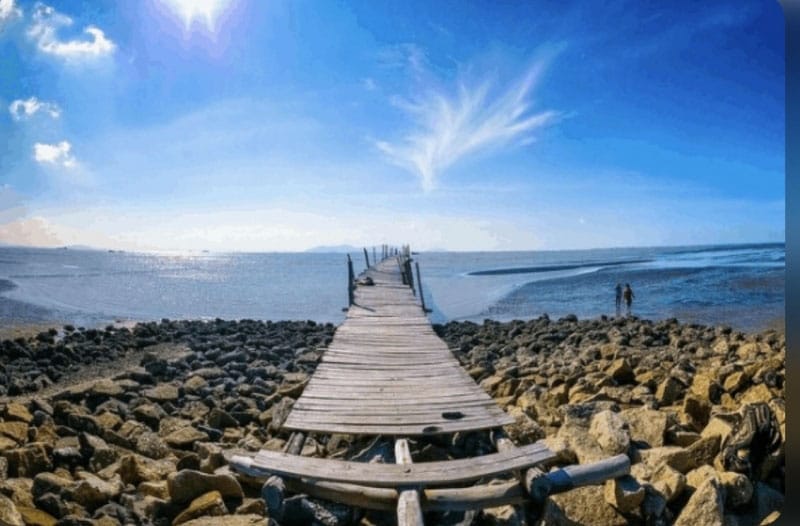
Every journey to Cần Giờ begins, inevitably, with the 30 4 Beach, a long brown-sea shoreline that confounds first-timers and delights those who understand it. The water here wears the color of river earth, as though carrying stories from hundreds of kilometers upstream. Many travelers mistake it for pollution, but this is the natural hue of silt-rich tropical waters, the same fertile mud that has enriched Vietnamese coastlines for centuries.
Walk along the shore at dawn and the entire universe seems to glow. The sunlight hits the waves and transforms the brown into molten bronze. The horizon blushes. Fishermen appear as silhouettes carved into a moving canvas. Everything feels rhythmic, contemplative, almost monastic.
The sand is fine. The breeze is generous. And the casuarina trees form a natural cathedral where the wind becomes its own choir.
Find a café scattered along the shoreline—Coffee Can Gio, Phố Biển, or the breezy riverfront Gan Hao—and sink into a hammock with a coconut ice cream or a cold tamarind drink. You may discover, to your mild astonishment, that hours vanish here without permission.
This beach is not the kind that begs for selfies.
It is the kind that invites you to exhale.
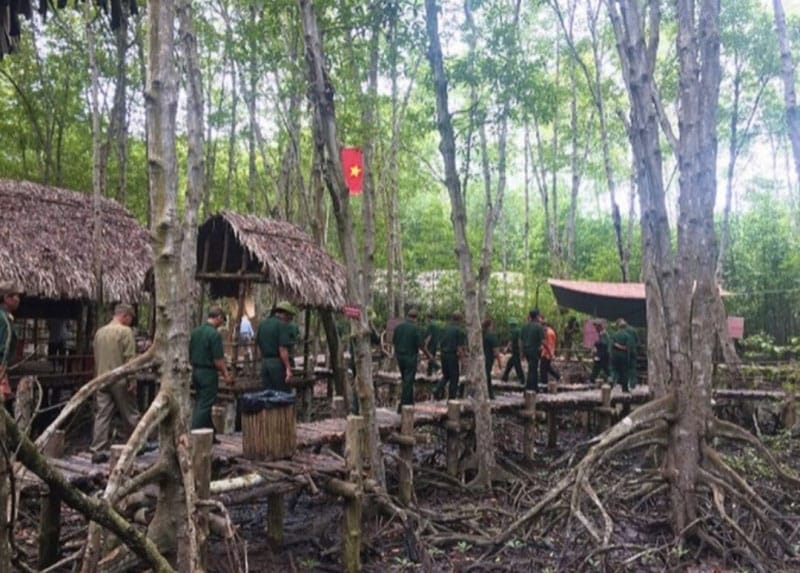
THE FOREST OF GHOSTS AND HEROES, THE RUNG SAC MILITARY BASE
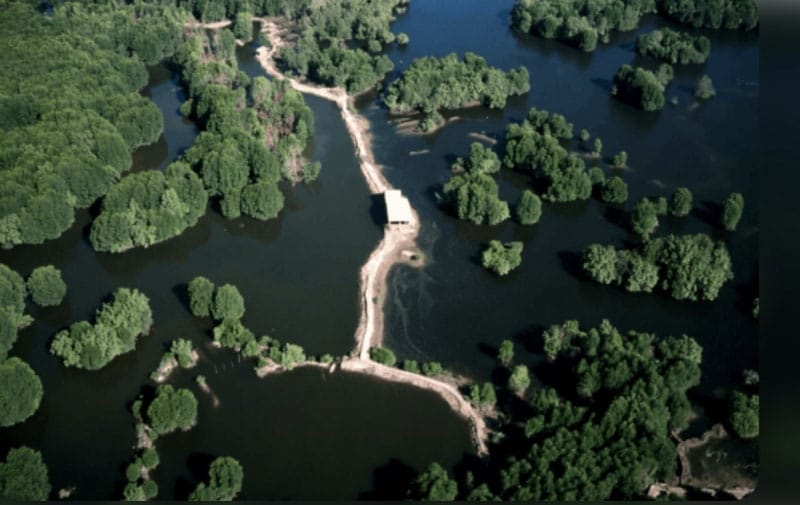
Follow the Rung Sac Road deeper into the peninsula and the landscape transforms again. The mangrove forest thickens into a labyrinth of arching roots and water channels that look almost prehistoric. Canoes glide across brown-green water that mirrors the sky with shadowy precision.
This is the Rung Sac Military Base, a reconstructed stronghold where Vietnam’s legendary special forces fought through mud, river, swamp, and survival itself. The place resonates with stories so raw they feel like echoes gripping the air.
Life-sized sculptures stand frozen in scenes of wartime bravery:
Commanders strategizing under dripping leaves.
Soldiers wrestling crocodiles in dark creeks.
Guerillas distilling fresh water from saltwater in makeshift stills.
It is impossible to walk here without feeling the past press lightly against your shoulder, as though whispering, “Look closely. Life was lived here.”
Unlike museums polished to sterility, Rung Sac feels textured, atmospheric, alive with the memory of struggle. The forest around you sways with a slow, knowing rhythm, and for a moment you feel suspended between eras, carried by the same waters that once protected warriors.
THE MAJESTIC CHAOS OF MONKEY ISLAND
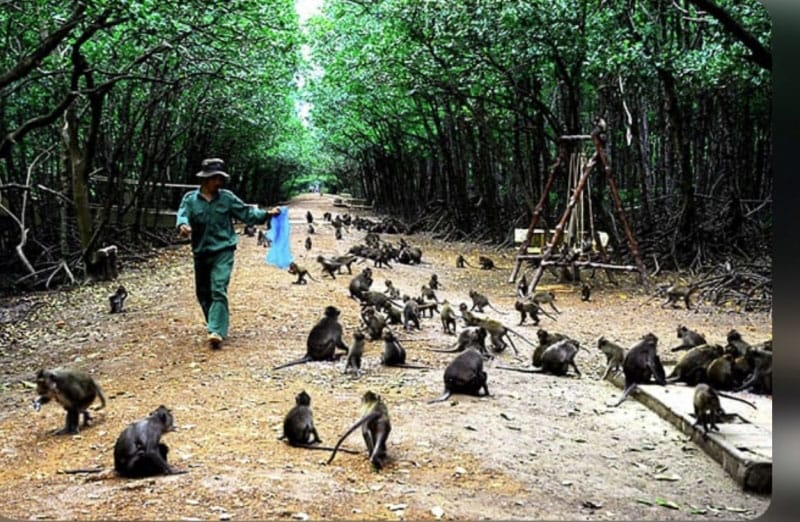
Continue down the road, just a few kilometers, and you enter an entirely different kingdom—Monkey Island. If Rung Sac is solemn history carved in green, Monkey Island is exuberant pandemonium wearing a furry grin.
Over 2,000 monkeys roam freely here, each one a tiny bandit with an Olympic-level skill for snatching sunglasses, snacks, or unattended water bottles. They are mischievous, charismatic, and strangely charming, like small comedians hired by nature to keep travelers humble.
Stand quietly and observe. You’ll see them grooming each other with meditative devotion, squabbling over fruit, leaping through branches like acrobats who forgot gravity is real. Their social world is a living documentary, tender and chaotic at once.
The island itself is lush—mangroves, shaded pathways, the scent of earth still damp from last night’s tide. It is astonishingly tranquil when the monkeys pause their antics, allowing you to hear the rustle of leaves, the distant call of birds, the soft clap of water against tree roots.
Cần Giờ is one of Vietnam’s first UNESCO biosphere reserves, and standing here you understand why. Life, in every form, bursts from the landscape.
WHY TRAVELERS KEEP RETURNING
Cần Giờ has no glittering resorts or neon nightlife. No aggressive tourism. No orchestrated glamour.
What it has is authenticity.
Raw nature.
A rhythm that slows your pulse.
A sense of being embraced rather than entertained.
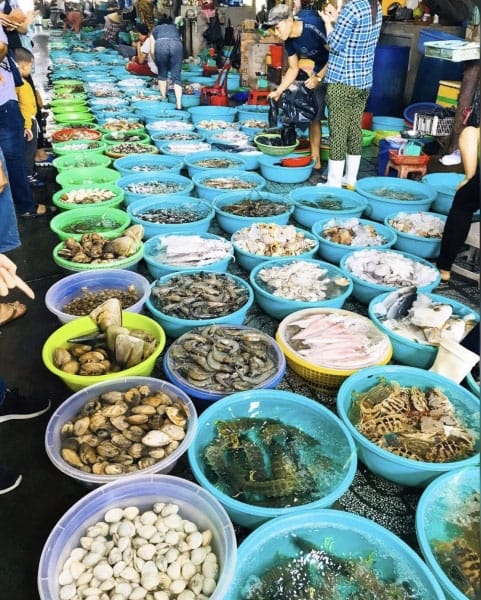
Travelers come back for the seafood, for the breezy cafes, for the wilderness, but more than anything—they return for the feeling. The feeling of stepping into a world where the modern rush loosens its grip and something older, steadier, more elemental begins to speak.
Spend a single day here and you will understand.
Spend a weekend and you might find yourself planning your return before you even leave.
Cần Giờ is the rare destination that doesn’t try to impress you.
It simply shows you life as it truly is—unvarnished, rhythmic, quietly magnificent.
Can Gio travel,Saigon escape,Vietnam mangrove,Monkey Island,Rung Sac Base,Can Gio beach,Vietnam coastline,Eco Vietnam,Saigon weekend,Can Gio nature,Mangrove tour,Coastal Vietnam,Can Gio guide,Vietnam wildlife,Saigon daytrip
