
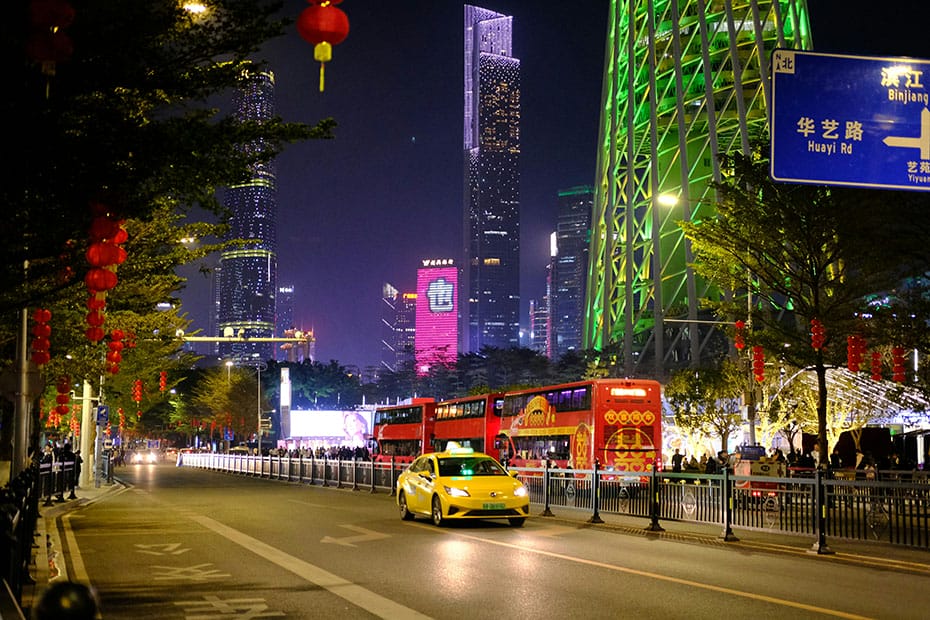
A Night Walk Through Guangzhou Markets – What Beijing Road Doesn’t Tell First-Time Visitors
Travel guides often present Guangzhou as a city of towering malls, neon shopping streets, and endless wholesale markets. That description is not wrong—but it is incomplete.
The real Guangzhou emerges when you slow down. When you walk instead of rushing between subway stations. When rain interrupts your evening plans and forces you to step under a temporary roof beside a street vendor.
This article shifts perspective from traveler to planner—someone observing how a city functions rather than simply consuming its attractions. The journey begins on a rainy evening along Yi De Road, continues through food stalls and metro crowds, and eventually reaches Beijing Road Pedestrian Street, one of the most recognizable commercial streets in Guangzhou.
Along the way, you start noticing how urban commerce works here: street food improvisation, aggressive bargaining, wholesale distribution networks, and small social dramas unfolding on sidewalks.
A travel planner looks at these moments differently. Not just as experiences—but as clues.
Quick Travel Overview
| Destination Area | Key Experience | Practical Insight |
|---|---|---|
| Yi De Road | Street food stalls and wholesale trade | Early evening street food culture |
| Beijing Road Pedestrian Street | Shopping, souvenirs, night markets | Bargaining is expected |
| Guangzhou Wholesale Markets | Large multi-floor commercial buildings | Products organized by category |
| Local Breakfast Shops | Chinese morning dishes | Authentic daily food culture |
| Neighborhood Markets | Produce and small food stalls | Everyday life beyond tourist zones |
The Rainy Introduction to Yi De Road
On the first evening in Guangzhou, the plan was simple: walk through the city and see what appeared naturally. No itinerary. No rigid schedule.
Then the rain started.
The nearest shelter happened to be an unfinished building along Yi De Road, where a small food cart stood under plastic sheets. Moments like this often become the most revealing travel experiences.
The vendor was selling something that looked familiar: pha lau, a dish commonly associated with Vietnamese street food. But here, the flavor profile was different. The aroma carried the unmistakable scent of traditional Chinese herbal spices.
Not everyone likes the medicinal fragrance typical of Chinese cooking. Yet curiosity wins easily when traveling.
The result? Surprisingly enjoyable.
A small bowl, slightly herbal, slightly savory—something halfway between street snack and medicinal soup.
Urban travel tip: street food culture often evolves across borders. The same dish may change flavor entirely depending on local traditions.
Street Food Curiosity – And Limits
Across the road, several carts were selling quick snacks.
One of them offered a legendary dish known across East Asia: stinky tofu.
The name alone explains the hesitation. The smell arrives before the stall even appears in view. Some locals insist that the stronger the smell, the better the flavor.
Crowds gathered around the cart. Enthusiastic eaters. Curious passersby.
But curiosity has limits.
Sometimes the most honest travel decision is simply to walk past.
Searching for the Metro in the Rain
With the rain still falling, the next logical step was the subway.
The entrance to the metro looked promising—until the crowd appeared. Evening rush hour in Guangzhou moves with the density of an ocean current. Long lines formed at the ticket machines, and the station entrance resembled a packed transit hub rather than a tourist attraction.
Urban planner insight: transport infrastructure in megacities functions on scale. Everything is built larger than expected because demand requires it.
Instead of waiting in the queue, the plan changed again.
The destination became Beijing Road Pedestrian Street.
Beijing Road – Guangzhou’s Night Market Engine
Beijing Road is one of Guangzhou’s busiest pedestrian shopping districts. Tourists, business travelers, and local shoppers converge here every evening.
Large commercial malls dominate the skyline, but the sidewalks tell a different story. Along the edges of the street you find small stalls selling souvenirs, clothing, and everyday items.
Negotiation is not optional.
The first price offered is rarely the real price.
Experienced shoppers know the routine:
Start at about one-third of the asking price and negotiate upward if necessary.
This bargaining culture is deeply embedded in many traditional Asian markets. For travelers unfamiliar with the system, it can feel uncomfortable—but locals treat it as normal conversation.
Food Everywhere
The density of food options along Beijing Road can overwhelm first-time visitors.
Street stalls sell grilled chicken hearts, roasted offal, sweet corn drinks, and international snacks. Restaurants offer Chinese regional dishes alongside Western fast food.
One practical observation quickly emerges: some vendors discourage photography.
It is not about privacy. Many food sellers believe photographs might reveal their cooking methods or recipes.
For them, food preparation is intellectual property.
A Late-Night Street Snack
After hours of walking, hunger appears suddenly.
A quick purchase solves the problem: skewers of grilled chicken hearts paired with a cup of herbal tea. Not a glamorous meal, but perfect for eating while walking through crowded streets.
Travel planners often recommend street snacks precisely for this reason: mobility. You eat without interrupting your exploration.
Eventually fatigue sets in, and transportation becomes necessary.
Taxi queues line the edge of the district, functioning almost like mini taxi terminals.
One surprising detail inside many taxis is a metal mesh barrier separating driver and passengers. A small opening allows payment but prevents physical contact.
The design may not look elegant, but it is effective security.
Morning in Guangzhou – Breakfast Reality
The following morning began at a small restaurant near the hotel.
Menus consisted entirely of Chinese dishes: dumplings, savory pastries, noodle soup, rice porridge.
No international breakfast.
And that was precisely the point.
Returning to the same place each morning revealed something important about daily life in Guangzhou: breakfast culture is communal and fast. Workers stop by before heading to markets, warehouses, or offices.
For travelers, these neighborhood restaurants offer a simple way to experience local rhythm.
Inside Guangzhou’s Wholesale Markets
The primary purpose of the trip was not sightseeing—it was market research.
Guangzhou is one of Asia’s most important wholesale trading hubs, and entire commercial districts are dedicated to bulk trade.
Near Yi De Road stands a large wholesale market specializing in dried goods and agricultural products. Here you find dried shrimp, cashews, lotus seeds, dried fish, mushrooms, and luxury ingredients like abalone or shark fin.
Goods are packaged into boxes and shipped across China and beyond.
Some of those shipments likely travel to Vietnam.
A travel planner viewing this scene recognizes Guangzhou’s deeper role: a supply chain hub connecting regional markets.
Exploring Commercial Buildings
Large wholesale centers dominate the city.
These buildings often stretch from the ground floor to the fifteenth floor or higher, each level specializing in a different category of products.
One floor might sell office supplies. Another clothing. Another electronics.
For traders and importers, the strategy is simple:
-
Visit multiple shops
-
Request product catalogs
-
Compare prices
-
Discuss shipping and payment methods
Many of these products eventually appear in markets across Southeast Asia.
Lunch at a Worker’s Restaurant
After hours of walking between markets, energy levels dropped sharply.
Lunch became necessary.
The chosen restaurant was filled almost entirely with Chinese laborers moving goods through nearby warehouses. The process worked differently from typical restaurants.
First: purchase meal tickets.
Then: present the ticket and point to dishes you want.
Ticket prices correspond to how many dishes you can select.
Even the smallest meal included multiple dishes, soup, and vegetables. Portions were designed for people doing physically demanding work.
The food leaned heavily toward oil-rich stir-fries—practical calories for manual labor.
Scale – The Real Surprise of Guangzhou
Before visiting China, many travelers hear the same description: everything is big.
It sounds like exaggeration.
Until you see it.
Apartment blocks stretch across entire districts. Markets fill multi-story buildings. Metro stations resemble airports.
In Guangzhou, scale is not luxury—it is necessity.
A massive population requires infrastructure designed for volume.
Evening Market Stop
After several days of oily restaurant food, something lighter sounded appealing.
A small neighborhood market offered fresh vegetables, fruit, and meat. Late afternoon meant limited selection, but it was still lively.
One purchase solved dinner: roasted duck paired with steamed buns.
Simple. Satisfying.
While browsing fruit stalls, a conversation with a vendor turned unexpectedly amusing. When asked where the watermelons came from, the vendor confidently replied:
“From the United States.”
Whether that claim was accurate remained uncertain—but it illustrated how international trade narratives sometimes appear in everyday conversations.
Things the Media Doesn’t Tell You
Travel marketing tends to simplify cities into a few photogenic landmarks. Guangzhou rarely appears in glossy travel campaigns compared with other Chinese destinations.
But the city reveals several realities worth understanding.
1. Guangzhou is primarily a trading city.
Tourism exists, but commerce dominates daily life. Markets, logistics, and distribution networks shape the urban rhythm.
2. Street interactions can be intense.
In busy districts like Beijing Road, vendors—including flower-selling children—may persistently approach couples or tourists.
3. Markets function as global supply chains.
The wholesale districts are not merely shopping areas—they are nodes in international trade networks.
4. Environmental habits appear in small policies.
Many supermarkets charge customers for plastic bags, encouraging reusable shopping habits.
These details rarely appear in travel brochures, but they shape the real experience of the city.
Community Observations
Travel forums and community discussions frequently mention the same impressions:
“The scale of Guangzhou markets is overwhelming the first time.”
“Beijing Road is chaotic but fascinating—you see locals and tourists mixing together.”
“Wholesale buildings feel like entire commercial ecosystems.”
Such comments reinforce what on-the-ground observations suggest: Guangzhou is not designed primarily for sightseeing.
It is designed for movement, trade, and business.
Travelers who understand this dynamic usually appreciate the city much more.
Beijing Road Guangzhou – A Planner’s Guide to the City’s Most Chaotic Night Market.
Guangzhou night market, Beijing Road shopping, Yi De Road market, Guangzhou street food, Guangzhou wholesale markets, China night market guide, Beijing Road Guangzhou travel, Guangzhou street snacks, Guangzhou market culture, Guangzhou travel planner, Guangzhou walking tour, China street market guide, Guangzhou food stalls, Guangzhou business markets, Guangzhou urban travel
