There are capitals that dazzle, and then there is Vientiane. It does not shout. It does not hustle. It does not compete. Instead, it waits. And somehow, that waiting becomes magnetic. Arriving in the capital of Laos feels less like stepping into a city and more like entering a long, thoughtful sentence that refuses to end quickly. The air is warm, unhurried. Streets breathe. Time loosens its grip. You realize, almost at once, that Vientiane will not be consumed. It must be absorbed.
Vientiane sits gently along the Mekong River, facing Thailand with a kind of untroubled confidence. The river is not a border here so much as a companion. In the early mornings, monks move through neighborhoods barefoot, saffron robes brushing the day awake. Cafes open slowly. Bread arrives warm. The city clears its throat and begins.
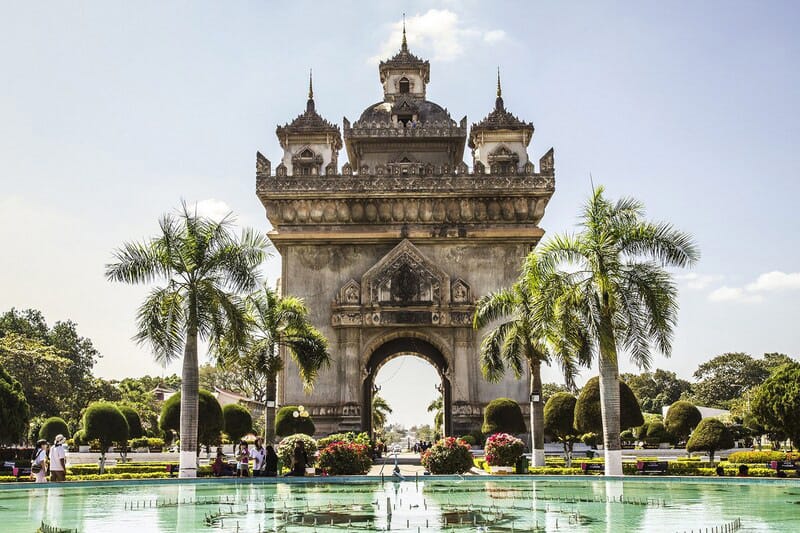
Patuxay, the Victory Monument, rises at the heart of this calm. Positioned on Lane Xang Avenue, it borrows its broad silhouette from Paris yet refuses to imitate it. The arches are distinctly Lao, layered with mythic creatures, lotus motifs, and decorative flourishes that feel ceremonial rather than imperial. Built in the late 1950s as a memorial to those who fought for independence, Patuxay is both monument and meditation. Climb to the upper levels and Vientiane stretches out below, low roofed, green edged, modest to the point of pride. The city does not aspire to skyscrapers. It aspires to balance.
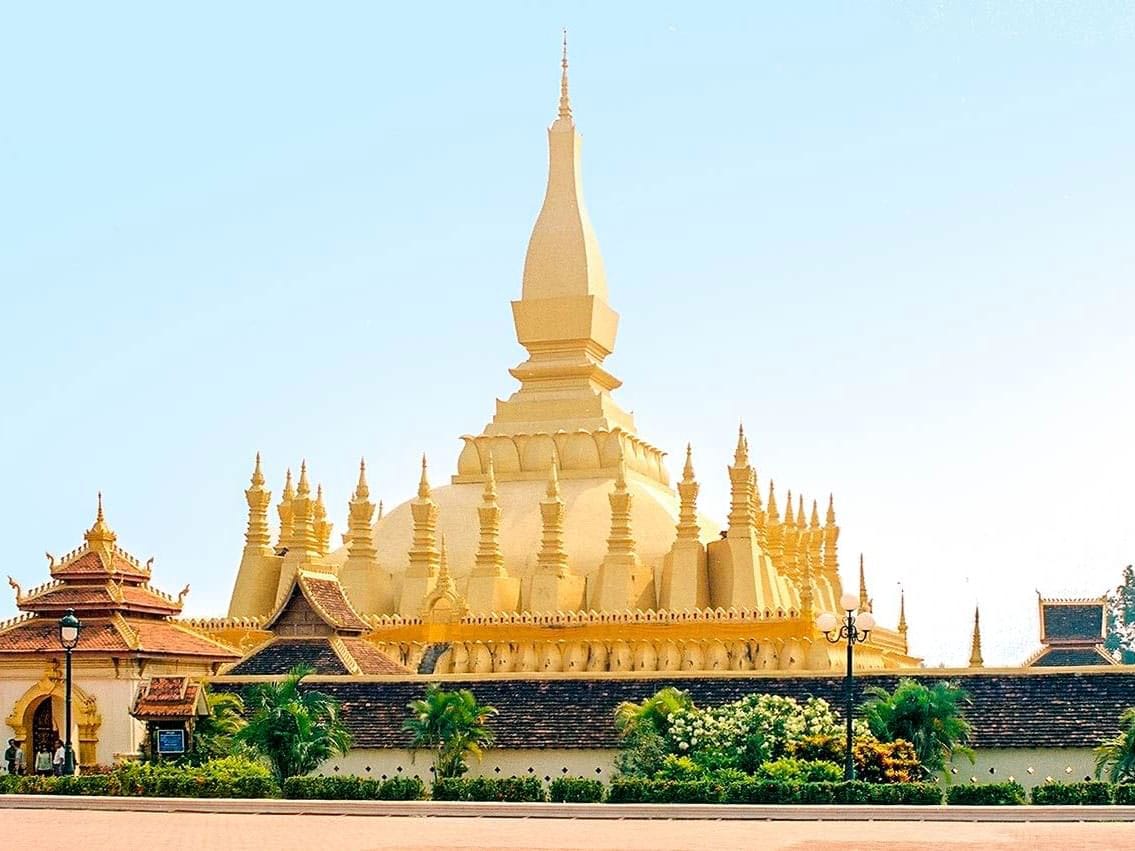
Following Lane Xang leads inevitably to Pha That Luang, the soul of Laos cast in gold. This immense Buddhist stupa, constructed in 1566 atop the ruins of a much older Khmer shrine, is not simply sacred. It is elemental. Its proportions recall a wine vessel, rounded and resolute, its surface gilded to catch even the shyest light. That Luang appears on the national emblem, on currency, in memory. Visiting it is less sightseeing than acknowledgment. Every November, the That Luang Festival gathers monks, pilgrims, vendors, and believers from across the country. On ordinary days, the stupa stands in dignified silence, asking nothing except respect. Entry is inexpensive, but the experience feels priceless.
A short journey east of the city reveals Buddha Park, also known as Xieng Khuan, one of Southeast Asia’s most improbable spiritual landscapes. More than two hundred concrete sculptures populate this riverside field, merging Buddhist and Hindu iconography with unsettling creativity. A reclining Buddha stretches forty meters long. Demons leer. Deities meditate. At the center stands a massive pumpkin shaped structure. Enter through a gaping demon mouth and climb its internal staircases, passing through symbolic levels of hell, earth, and heaven. From the top, the Mekong drifts past as if none of this is unusual. Reaching Buddha Park is an experience in itself. Tuk tuk journeys feel communal and negotiable. Bus number forty five from Talat Sao is cheaper, slower, more local. Both work. Both reveal something.
Talat Sao, the Morning Market, occupies a pivotal corner of the city and functions as both shopping center and cultural lens. Open from early morning until late afternoon, it sells nearly everything imaginable. Silk scarves in saturated colors. Silver jewelry. Hand carved musical instruments. Electronics beside incense. Fruit stalls heavy with scent. Talat Sao has modernized over time, but its spirit remains stubbornly Lao. This is not a place designed solely for visitors. It is where locals come to buy, gossip, negotiate, and pause for iced coffee. Souvenirs acquired here carry context, not just price tags.
Sacred spaces define Vientiane, and Wat Phra Keo stands among the most exquisite. Once the home of the Emerald Buddha, now residing in Bangkok, this temple has evolved into a museum of religious art and craftsmanship. Gold leaf, jade, silver, and lacquered wood create an atmosphere of luminous density. Every surface seems intentional. Every artifact speaks of devotion refined over centuries. Wat Phra Keo does not overwhelm with scale. It overwhelms with detail.
Just across the way, Wat Sisaket offers a different kind of astonishment. Built in 1818 and remarkably preserved, it remains the oldest surviving temple in Vientiane. Its cloister walls hold thousands upon thousands of Buddha images, arranged in niches like a vast, serene audience. Bronze, ceramic, wood, gold. Some are no larger than a hand. Others command attention. The total number exceeds six thousand. Walking these corridors feels like moving through accumulated faith, layer upon layer, unbroken by time or conflict.
Nearby, Wat Ong Teu announces itself with weight rather than ornament. Known as the Temple of the Heavy Buddha, it houses the largest bronze Buddha statue in the city. The presence is undeniable. This temple also functions as an important center for Buddhist education, with monks from across Laos arriving to study doctrine and discipline. The atmosphere is purposeful, serious, quietly intense.
Wat Si Muang introduces yet another dimension of belief. Here, Buddhism intertwines with older animist traditions. The temple is associated with a local woman named Si Muang, said to have sacrificed herself to appease protective spirits during the city’s founding. Her story lingers. Visitors come not only to pray but to tie white strings around their wrists, a traditional blessing believed to bring luck and balance. It is intimate, human, deeply rooted.
Vientiane is not only temples and monuments. It is also lived space. Riverfront evenings reveal food stalls selling grilled fish, sticky rice, papaya salad sharp with lime and chilies. Beer Lao arrives cold, reliably excellent, shared rather than claimed. Prices remain gentle. A good meal costs little. A good conversation costs nothing.
Accommodation mirrors the city’s temperament. Boutique hotels occupy restored colonial buildings. Guesthouses feel familial. Larger hotels offer river views and calm efficiency without theatrical excess. Rooms are quiet. Staff remember names. Mornings include strong coffee and time to linger. Staying near the Mekong or along Lane Xang places most sights within easy reach, often by foot or bicycle.
A well designed Vientiane tour does not rush. It layers. Morning temples. Afternoon markets. Late day river walks. Optional excursions to Buddha Park. Optional pauses that become essential. The climax arrives quietly, perhaps at sunset, when the sky dissolves into peach and violet above the Mekong and you realize you are not checking your phone.
Insider knowledge matters. Visit Patuxay early for softer light and fewer visitors. Attend That Luang outside festival days for solitude. At Buddha Park, climb the pumpkin last. In Wat Sisaket, look closely at the smallest Buddha figures. Eat where menus are not translated. Choose tuk tuks by conversation, not by urgency.
Vientiane is not a city that demands your presence. It invites it. And once you accept, it rearranges something internal. You leave calmer. More deliberate. Already planning a return that feels less like travel and more like continuation.
This is a capital for travelers who value texture over spectacle, atmosphere over agenda. Vientiane rewards attention. It rewards slowness. And it rewards those who understand that sometimes the most powerful destinations do not raise their voices at all.
Vientiane travel guide, Vientiane tour, Vientiane attractions, Vientiane temples, Laos capital travel, Vientiane cultural tour, Pha That Luang visit, Patuxay monument, Buddha Park Vientiane, Vientiane itinerary, Vientiane hotel stay, Mekong River Vientiane, Vientiane sightseeing, Laos travel experience, Vientiane city tour