
Northern Vietnam Holiday Guide – 5 Places for the 2 September Escape
Holiday travel in Vietnam often follows a predictable pattern. Beaches fill with families, mountain towns attract hikers, and lakeside villages become temporary retreats from urban life.
During the National Day holiday on September 2, northern Vietnam offers a particularly interesting range of landscapes within relatively short travel distances.
Within a single region, travelers can experience island coastlines, high mountain terraces, forested plateaus, river valleys, and freshwater lakes surrounded by limestone cliffs.
For planners building a long-weekend itinerary from Hanoi, five destinations stand out not because they are heavily promoted, but because they represent five very different ecosystems.
Each location reveals a different version of northern Vietnam.
Quick Summary Table
| Destination | Province | Landscape | Main Experience |
|---|---|---|---|
| Co To Island | Quang Ninh | Coastal islands | Beaches and cycling |
| Sapa | Lao Cai | Mountain highlands | Rice terraces and ethnic culture |
| Moc Chau | Son La | Plateau | Tea hills and waterfalls |
| Thung Nai | Hoa Binh | River valley | Lake scenery |
| Ba Be Lake | Bac Kan | Freshwater lake | National park and caves |
1. Co To Island – The Remote Coastline
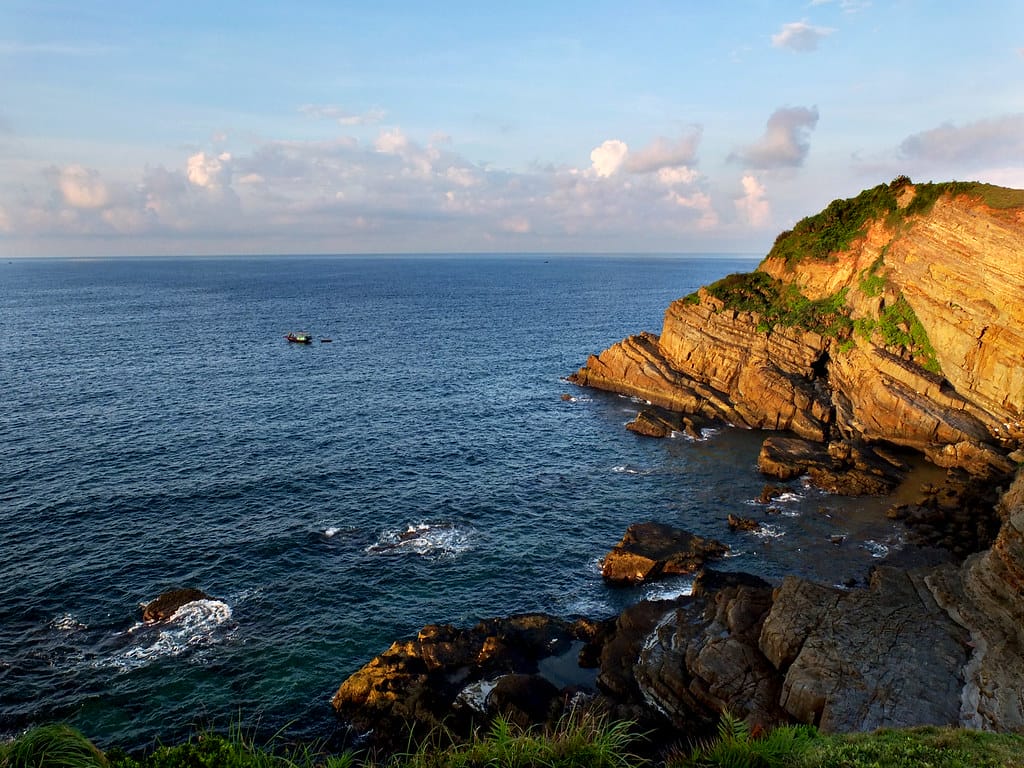
Far out in the waters of Quang Ninh Province lies the small archipelago known as:
Co To Island
Locals sometimes describe the islands as resembling dragon tails rising and falling across the sea, an image drawn from Vietnamese folklore.
For travelers, the appeal is simpler.
Co To combines beaches, forest, and quiet cycling routes within a relatively small area.
Visitors spend mornings swimming or walking along the shoreline. By afternoon, many rent bicycles and follow the coastal road known locally as the “Love Road”, shaded by long rows of trees.
The island’s highest viewpoint is the historic lighthouse:
Co To Lighthouse
From the top platform, the surrounding islands appear scattered across the horizon.
Unlike heavily developed resort beaches, Co To remains relatively natural. Forest patches still cover parts of the island, and small fishing communities maintain a slower rhythm of life.
For holiday planners, the island works best as a two-day coastal retreat.
2. Sapa – Mountain Landscapes and Cultural Encounters
Few mountain towns in Vietnam carry the same reputation as:
Sapa
Located in Lao Cai Province, the town sits high in the mountains near the Chinese border.
The landscape surrounding Sapa is shaped by terraced rice fields climbing steep hillsides, a system developed over generations by ethnic minority communities.
Morning fog often drifts through the valleys, revealing villages gradually as the day brightens.
Visitors typically explore several key landmarks:
-
Ham Rong Mountain
-
Silver Waterfall
-
Fansipan Mountain — known as the highest peak in Indochina
Another important cultural stop is:
Cat Cat Village
This Hmong village preserves traditional handicrafts such as weaving linen fabric and crafting silver jewelry.
Local markets add another dimension to the experience. People arrive wearing colorful traditional clothing, and social gatherings sometimes include music played on bamboo flutes or traditional mouth harps.
For travelers planning a holiday trip, Sapa combines scenery with cultural interaction.
3. Moc Chau Plateau – Tea Hills and Waterfalls
Southwest of Hanoi lies one of northern Vietnam’s most distinctive highland environments:
Moc Chau Plateau
The plateau sits within Son La Province and is known for its mild climate and agricultural landscapes.
Green tea plantations stretch across rolling hills, forming geometric patterns that change color throughout the year.
Visitors often spend time exploring:
-
fruit orchards filled with ripening plums
-
wide tea fields perfect for slow walks
-
waterfalls hidden within forest valleys
Two waterfalls frequently visited are:
Dai Yem Waterfall
Chieng Khoa Waterfall
In the center of Moc Chau town lies another unusual site:
Son Moc Huong Cave
Also known as Bat Cave, its entrance overlooks a wide valley framed by seven small mountains that locals often describe as seven jewels.
Standing at the cave entrance gives visitors a sweeping view across the plateau town.
4. Thung Nai – River Landscapes of Hoa Binh
About 100 kilometers from Hanoi sits a quiet lakeside region:
Thung Nai in Hoa Binh Province
The landscape surrounds the reservoir formed by the Da River hydroelectric dam.
Rocky islands rise from the water, creating a scene many travelers compare to a miniature inland version of Ha Long Bay.
The combination of mountains, water, and forest creates a calm atmosphere that contrasts sharply with urban Hanoi.
Visitors usually explore by boat across the lake.
The region’s slower pace encourages simple activities:
-
drifting along the reservoir
-
watching mountain silhouettes at sunset
-
breathing cooler air carried from surrounding forests
For holiday planners, Thung Nai offers a convenient short escape from the capital.
5. Ba Be Lake – Freshwater Wilderness
Deep within the mountains of northern Vietnam lies one of the country’s largest natural lakes:
Ba Be Lake
Located in Bac Kan Province, the lake forms the center of a national park ecosystem surrounded by limestone mountains and dense forest.
The water remains remarkably clear, often allowing visitors to see aquatic plants beneath the surface.
Boat trips across the lake lead to several notable sites including:
Puong Cave
The cave stretches beneath limestone cliffs and contains dramatic stalactites shaped by centuries of mineral deposits.
The broader landscape feels expansive — mountains, sky, and water merging into a single horizon.
For travelers seeking quiet natural scenery, Ba Be provides one of the most immersive environments in northern Vietnam.
Things the Media Doesn’t Tell You
Travel promotion often focuses on scenic photographs but leaves out practical planning realities.
A more complete perspective helps travelers prepare better.
1. Travel time matters
Some destinations such as Sapa or Ba Be require significant travel time from Hanoi. Planning overnight stays rather than day trips improves the experience.
2. Weather varies dramatically
Northern Vietnam landscapes differ greatly in climate. Coastal islands like Co To can feel humid, while highland areas like Sapa may be cool even in summer.
3. Cultural encounters depend on timing
Local markets and community gatherings occur on specific days. Without planning, travelers may miss them entirely.
4. Natural landscapes dominate these destinations
Unlike large cities, most of these locations offer simple activities — walking, boating, cycling, or observing scenery.
Travelers expecting large entertainment infrastructure may find the pace intentionally slow.
Community Observations
Travel communities often describe northern Vietnam not as a single destination but as a collection of landscapes.
One traveler summarized the experience simply:
“In the north you don’t visit one place—you travel between ecosystems.”
Another comment frequently appears in travel forums:
“Leave time for the journey. The roads are part of the experience.”
These observations reflect the rhythm of the region.
5 Places to Visit in Northern Vietnam – From Co To Island to Ba Be Lake.
northern Vietnam travel, Vietnam holiday destinations, Co To island travel, Sapa mountain guide, Moc Chau plateau travel, Ba Be lake guide, Thung Nai Hoa Binh, northern Vietnam nature, Vietnam national day trip, northern Vietnam itinerary, Vietnam mountain travel, Vietnam island escape, Vietnam lake landscapes, Vietnam plateau travel, Hanoi weekend escape
