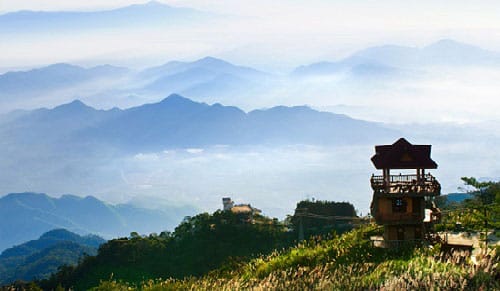
Some cities announce themselves with noise. Da Nang does it with balance.
Set along the Han River, Da Nang occupies one of the most enviable positions in Southeast Asia. To the east, the East Sea opens wide, its beaches stretched long and pale, curving patiently under a sky that seems perpetually inclined toward blue. To the north and west, mountains rise and tighten the horizon, culminating in the dramatic Hai Van Pass, a sinuous ribbon of road that forms a natural threshold between Da Nang and Hue. The city sits exactly where opposites agree. Sea and stone. Calm and motion. Past and present.
What makes Da Nang compelling is not a single attraction, but its ability to connect many. Three UNESCO World Heritage sites lie within easy reach. Hue with its imperial memory. Hoi An with its lantern lit intimacy. My Son Sanctuary with its ancient Cham devotion. Venture farther and you reach Phong Nha Ke Bang National Park, a cathedral of caves and forests. Da Nang is the hinge on which central Vietnam swings open.
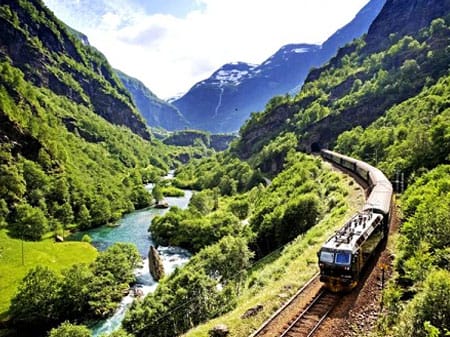
Arrival is refreshingly uncomplicated. The North South railway threads directly through the city, stopping at several stations, with Da Nang Station as one of the most significant on the entire line. If you have time, take the train. It is not efficient in the modern sense, but it is generous. You pass lagoons, cliffs, fishing villages, stretches of coast that appear and disappear like half formed thoughts. Twenty four hours from Hanoi or Ho Chi Minh City buys you perspective.
Flying is faster, of course. Roughly seventy minutes from either end of the country. With a little planning, airfares remain reasonable. Da Nang International Airport sits close to the city, which means arrival feels immediate. You land and you are already there.
Road travel remains popular. Sleeper buses glide overnight from major cities, delivering you just in time for breakfast by the river.
Once arrived, accommodation becomes a pleasure rather than a puzzle. Da Nang has matured into a hospitality city. International standard hotels line the beachfront, especially along My Khe Beach, while boutique properties cluster near the river and downtown. Luxury resorts like Furama, Sandy Beach, and Son Tra Resort and Spa understand that travelers now want more than rooms. They offer space. Private beach access. Thoughtful dining. Spas designed not to impress but to persuade you to stay longer.
The benefits are subtle but persuasive. Sea facing rooms that turn mornings into rituals. Infinity pools that erase the line between water and sky. Concierge services that untangle day trips to Hue or Hoi An with quiet efficiency. Da Nang hotels do not shout luxury. They practice it.
Step outside and the city reveals its generosity.
Da Nang is a place where you can wake up in a five star resort, eat breakfast with your feet in the sand, then be standing in a mountain cave before lunch. The Marble Mountains, known in English as the Marble Mountains, sit only five kilometers southeast of the city center. Six limestone outcrops rise abruptly from the plain, named after the elements. Inside, caves open into sanctuaries. Light filters through stone apertures, illuminating altars and incense smoke. Monks move quietly. Birds nest in unreachable crevices. At the base, Non Nuoc Stone Village continues a centuries old tradition of carving marble into sculpture. Nearby, Non Nuoc Beach remains understated and refreshingly unspoiled.
Forty kilometers inland, Ba Na Hills lifts the temperature down by lifting you up. Once a French colonial retreat, abandoned and reclaimed by jungle, Ba Na Hills has been reborn as a mountain resort and entertainment complex. The ascent itself is part of the drama. A cable car carries you over forests and waterfalls, climbing into cooler air. At the top, the climate shifts, as if someone turned a dial. Gardens bloom. Old villas whisper of past ambitions. And then there is the Golden Bridge, held aloft by colossal stone hands, a structure that has become one of Vietnam’s most recognized images. It is surreal, theatrical, oddly moving. Like Da Nang itself, it bridges worlds.
To the northeast, Son Tra Peninsula thrusts into the sea like a protective shoulder. Known to American soldiers as Monkey Mountain, it remains one of the city’s wildest assets. This is a nature reserve first, a viewpoint second, and a reminder third. Rare flora and fauna survive here, including the red shanked douc langur, a primate so vividly colored it seems invented. Beaches curve along the peninsula’s base. Bai But, Bai Rang, Bai Bac, Bai Nom. Each has its own character. None feel overrun. The city remains visible, but distant.
And then there are the beaches themselves.
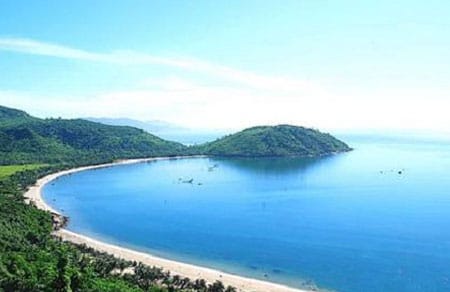
Da Nang’s coastline is long, wide, and remarkably consistent. Soft sand. Warm water year round. My Khe Beach earned international recognition as one of the most attractive beaches on the planet, but it wears the title lightly. Nam O, Xuan Thieu, Thanh Binh, Bac My An, Non Nuoc, T20. Names that sound better when spoken slowly. These beaches invite long walks rather than loud parties. Early mornings belong to swimmers and fishermen. Evenings belong to everyone else.
Cultural depth anchors the city. The Cham Sculpture Museum stands quietly near the Han River, housing the world’s most significant collection of Cham art. Sandstone figures, deities, guardians. Each piece is a fragment of a civilization that once dominated central Vietnam. The museum does not overwhelm. It educates by restraint.
Religious life continues beyond museum walls. The Avalokiteshvara Festival takes place during the first lunar month at the foot of the Marble Mountains. It is one of the largest Buddhist festivals in Da Nang, drawing monks, pilgrims, and the curious. Chanting, ceremonies, and quiet moments of reflection merge with the everyday hum of the city.
Da Nang eats well. That much is obvious.
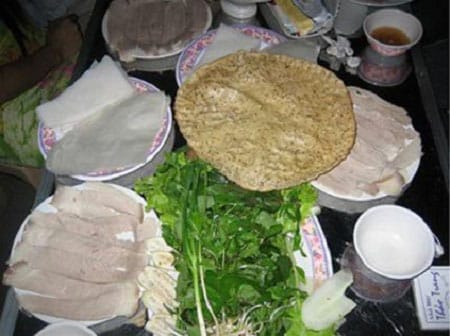
Han Market and Con Market anchor the city’s culinary life. They are busy, bright, and full of appetite. Supermarkets have multiplied, but markets remain relevant because flavor still prefers proximity. Mi Quang arrives golden and aromatic. Rice paper rolls with pork become an exercise in balance. Crispy pancakes crackle under herbs and heat. Grilled veal, fish noodle soup, fermented anchovy broth, sesame crackers. Nam O fish sauce is not just a condiment here. It is an inheritance.
Shopping is easy. Prices are generally fair. As with any travel, curiosity should be paired with clarity. Ask first. Decide second.
What makes Da Nang work is not perfection. It is proportion.
The city knows when to develop and when to pause. It invests in infrastructure without sacrificing shoreline. It welcomes visitors without displacing rhythm. It connects heritage sites without turning itself into a museum.
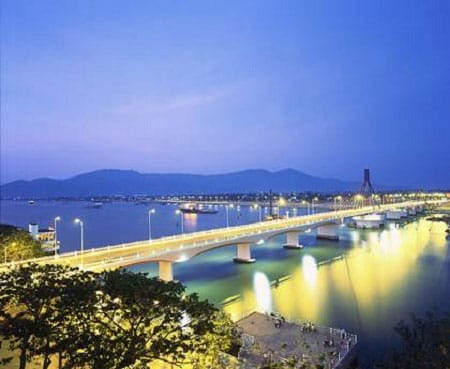
You can spend the morning watching fishermen pull nets from the sea. The afternoon floating in a rooftop pool. The evening eating street food by the river as bridges light up and the city exhales.
Da Nang does not insist that you stay.
It simply makes leaving feel premature.
And that, perhaps, is the most persuasive invitation of all.