Phan Thiet is not merely a seaside town. It is a long conversation between sand and memory, between the relentless sun and a coastline that never quite settles. Arriving here, you feel the air change. It smells faintly of salt and fish sauce, of heat stored overnight in dunes, of history that does not announce itself but waits patiently to be noticed. This is a place where travel slows you down whether you consent or not.
Begin inland, quietly, at Duc Thanh School. Founded in 1907 by patriotic scholars during the Duy Tan movement, this modest compound carries the weight of a nation’s awakening. Ho Chi Minh once taught here before his journey south. The wooden desks, the ink stones, the preserved rooms do not shout their importance. They whisper. Standing there, you understand that Phan Thiet is not only beaches and breezes. It is also thought, discipline, and the stubborn belief that education changes destiny.
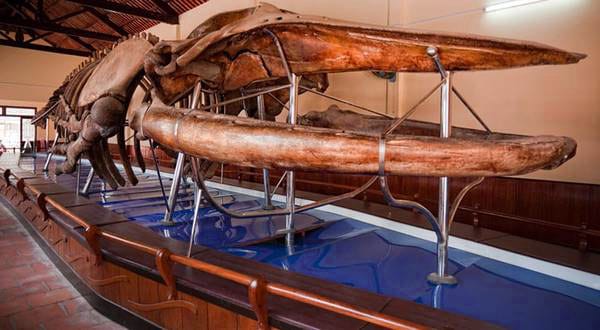
Not far away, Van Thuy Tu Temple tells a very different story, one written in salt water and devotion. Dedicated to the Whale God, this temple houses a colossal whale skeleton measuring twenty two meters in length and weighing sixty five tons, the largest of its kind in Southeast Asia. Fishermen come here not as tourists but as believers. Annual ceremonies fill the space with ritual music, ceremonial rowing dances, and prayers for safe seas. Even if you arrive on an ordinary day, the reverence lingers in the air.
Then comes the road. DT716 from Luong Son junction to Phan Ri is not simply a means of travel. It is an experience in motion. Nearly forty kilometers of asphalt unfurl through dunes and silence, skirting Bau Sen and Bau Trang, twin freshwater lakes improbably resting among sand hills. White dunes roll like frozen waves. The newer coastal stretch makes the journey smoother, but the scenery remains defiantly wild. Drive slowly. This road rewards those who linger.
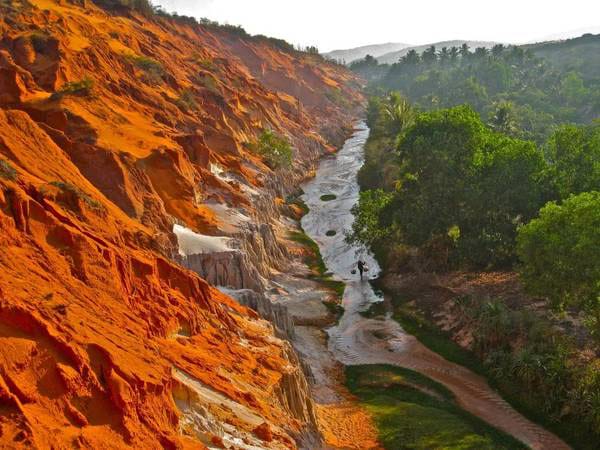
At Suoi Hong, also called Fairy Stream, water barely covers your ankles, yet the landscape towers around you. Red and white sand formations rise like unfinished sculptures, carved patiently by wind and water. Children splash, photographers linger, and everyone seems a little surprised that something so gentle can look so unreal. It is an easy walk, but one that rearranges your sense of scale.
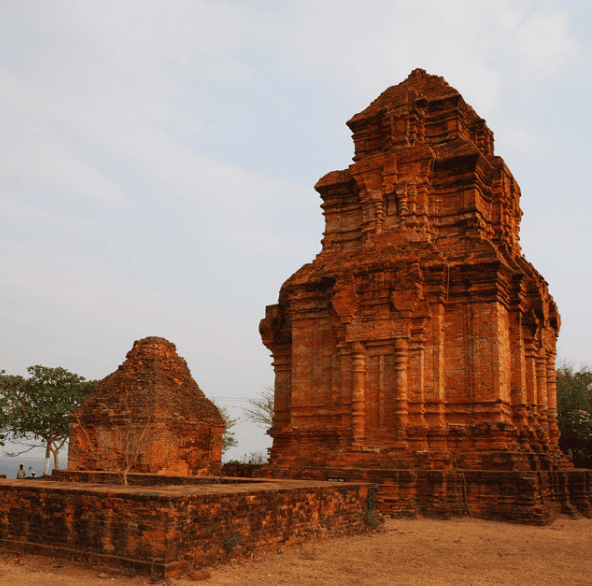
History returns at the Po Shanu Cham Towers, remnants of the ancient Champa Kingdom. Built in the Hoa Lai architectural style, these brick structures are small yet dignified, holding centuries of spiritual gravity in their weathered surfaces. Nearby, Ong Hoang Tower ruins recall the poet Han Mac Tu and a love story steeped in longing. Sunset here feels personal, almost intrusive, as if you are eavesdropping on the past.
Morning belongs to Mui Ne Fishing Village. Before dawn, boats crowd the water like floating lanterns. Nets are hauled in. Fish glint briefly before disappearing into baskets. The market hums softly, framed by coconut palms and habit rather than performance. This is daily life, not staged authenticity, and that is precisely its power.
A few minutes away, the Mui Ne Sand Dunes rise and fall like a living thing. Their colors shift with the light, from pale gold to deep rust, sometimes revealing as many as eighteen subtle shades. Locals rent plastic boards for sand sliding, an activity both ridiculous and irresistible. Afterwards, you sit, breathe, drink coconut water, and watch the dunes rearrange themselves yet again.
For those craving solitude, Mui Yen Cape offers something rare. A thirty meter high rocky promontory juts into the sea, raw and unsupervised. You can camp here, pitch a tent above crashing waves, and feel the night press in from all sides. There are no showers. No services. Only wind, stars, and the sea performing its ancient work. Swimming is possible, glorious even, but the absence of infrastructure is the point.
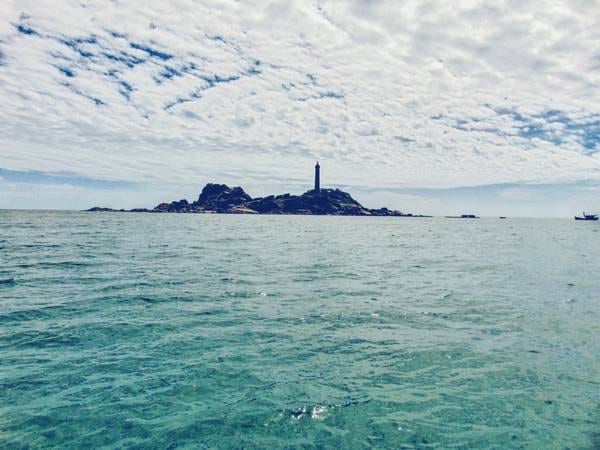
Ke Ga Lighthouse stands further south, monumental and solitary. Reached by boat or traditional basket boat, the granite tower rises above clear water and scattered rocks. Built during the French colonial period, it remains the tallest lighthouse in Vietnam. Standing at its base, you feel both protected and insignificant, a useful combination when traveling.
Ta Cu Mountain introduces a different rhythm. You can climb over a thousand stone steps through forest and sweat, or take a cable car that lifts you effortlessly to the summit. At the top, Linh Son Truong Tho Pagoda and Long Doan Pagoda sit among trees, presided over by a forty nine meter reclining Buddha, the largest in Southeast Asia. Silence feels appropriate here. Many visitors choose to explore nearby caves afterward, chasing legends and cool air.
Farther north, Co Thach Beach surprises even seasoned travelers. Thousands of smooth stones in every conceivable color blanket the shore, especially vivid during moss season. Recognized for its diversity of form and hue, this beach feels less like a coastline and more like a gallery curated by the sea itself.
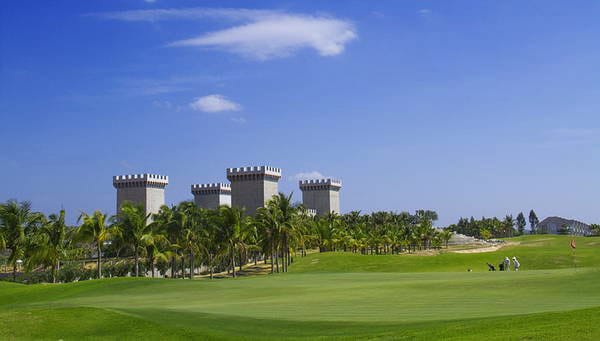
Modern indulgence arrives unexpectedly at the RD Wine Castle in Mui Ne. European medieval architecture rises against a tropical backdrop, complete with towers and vaulted halls. Inside, underground cellars showcase a closed wine production model, and tastings feature Napa Valley labels rarely encountered in this region. It is theatrical, unapologetic, and oddly enjoyable, a reminder that Phan Thiet enjoys contradiction.
Ong Dia Rock Beach returns you to legend. Named after a naturally formed rock resembling a guardian spirit gazing inland, the beach blends clear water with clusters of stone. Locals still burn incense here, quietly asking for prosperity. The sea listens without comment.
Cu Lao Cau Island appears offshore like a stranded battleship, surrounded by bizarre rock formations and green grass patches. Reached by boat in about ninety minutes, the island is uninhabited and protected. Snorkeling reveals healthy marine life. Walking reveals silence. Few places feel this unclaimed.
Finally, Phu Quy Island completes the story. One hundred kilometers from Phan Thiet, it holds temples like Linh Quang and Cao Cat, coral reefs, and beaches that feel untouched by hurry. Tri Duong Bay glows at sunrise. Smaller islets nearby deepen the sense of remoteness. Here, Phan Thiet’s allure crystallizes into something undeniable.
Accommodation throughout Phan Thiet ranges from beachfront resorts to intimate boutique hotels and practical guesthouses. Many offer sea view rooms, fresh seafood dining, attentive local staff, and direct access to tours linking dunes, temples, islands, and mountains. Prices remain reasonable, especially compared to more saturated destinations, and service is personal rather than procedural.
Phan Thiet does not beg for your attention. It earns it, slowly, steadily, until one day you realize you have stopped checking the time. That is when you know it is working.
Phan Thiet travel, Phan Thiet tour, Phan Thiet attractions, Phan Thiet beaches, Mui Ne travel, Phan Thiet itinerary, Phan Thiet hotel, Phan Thiet resort, Mui Ne sand dunes, Ke Ga Lighthouse, Phan Thiet islands, Phan Thiet cultural travel, Phan Thiet road trip, Phan Thiet sightseeing, Phan Thiet vacation