
Beijing to Ulaanbaatar by Train
A Planner’s Guide to Mongolia’s Most Unexpected Travel Experience
At 4 a.m. on the Trans-Siberian Railway, sunlight cuts sharply through the train window. Sleep ends abruptly. The train is somewhere between northern China and Mongolia, crossing one of Asia’s least densely populated landscapes.
This route—from Beijing, China to Ulaanbaatar, Mongolia—is often romanticized as a dramatic journey across deserts and endless wilderness. The reality is quieter. Slower. More nuanced.
Outside the window stretches an unexpected scene: green plains, scattered herds of sheep and horses, and wide blue skies. The landscape feels almost pastoral. No dramatic desert appears on the horizon.
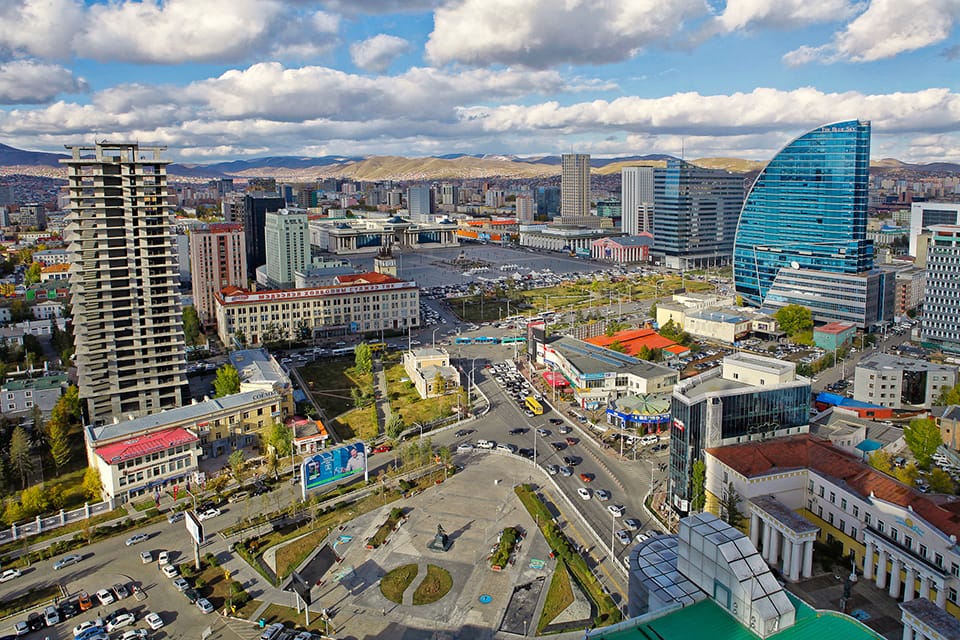
By the time travelers realize it, the train has already entered Ulaanbaatar, Mongolia’s capital and largest city.
For anyone planning the journey, the first lesson arrives early: Mongolia rarely matches the clichés travelers expect.
Quick Travel Summary Table
| Segment | Location | Experience | Key Observations |
|---|---|---|---|
| Train journey | Beijing → Mongolia | Trans-Siberian rail crossing | Plains, grazing animals, wide skies |
| Train dining car | Onboard | Limited food availability | Menu items often unavailable |
| Arrival | Ulaanbaatar | Capital city arrival | Urban environment appears gradually |
| Accommodation | Sunpath Hostel | Traveler gathering point | International backpacker hub |
| Market visit | Narantuul Market | Largest market in Mongolia | Dense crowds and diverse goods |
| Transport | Ulaanbaatar streets | Informal taxi system | Private cars often act as taxis |
| Food experience | Local restaurants | Lamb-based cuisine | Fried dumplings and salted milk |
The Train Journey: Beijing to Mongolia
Long-distance trains create a particular rhythm. You eat slowly. You look out the window for hours. Time becomes elastic.
On the Trans-Siberian line heading toward Mongolia, the dining car promises variety. The menu lists multiple dishes. But when passengers finally decide what to order, the staff returns with unexpected news.
Most of the menu is already unavailable.
Only three dishes remain.
Breakfast becomes a compromise: lamb liver, beef, eggs, milk tea, and coffee. The result is edible but unremarkable. Across the aisle, another traveler quietly eats instant noodles.
For a moment, that seems like the better choice.
A veteran rail traveler once described long-distance train dining this way:
“Menus on trains are optimistic documents. Reality is usually simpler.”
The real highlight of the journey lies outside the window.
Wide grasslands stretch across the horizon, punctuated by small clusters of houses. Herds move slowly across the steppe.
Instead of dramatic wilderness, the landscape feels calm and open.
And eventually, without ceremony, the train enters Ulaanbaatar.
Arrival in Ulaanbaatar
Unlike many capitals, Ulaanbaatar does not announce itself with an obvious skyline.
Urban areas appear gradually. A few residential buildings. A road. More houses.
Travelers often realize they have arrived only when the train slows at the station.
One of the most memorable moments of arrival has nothing to do with architecture.
On the platform, a fellow passenger—Tseren—is greeted by his wife and daughter. Their reunion is emotional and immediate. It’s a reminder that long-distance trains are not just tourist routes; they are everyday transportation connecting families across vast regions.
After the train empties, travelers begin the familiar ritual of arrival: finding accommodation.
Finding a Place to Stay: Sunpath Hostel
In Ulaanbaatar, many travelers gravitate toward Sunpath Hostel, a well-known gathering point for backpackers and overland travelers.
A small group leaving the station heads there together. The building is simple but functional. Rooms are inspected carefully before committing to stay.
The hostel offers something valuable beyond beds: organized tours and travel advice.
Inside, conversations quickly form among travelers from around the world—the United States, Canada, Australia, and several European countries.
It becomes clear that many people are planning the same outing.
A visit to Narantuul Market, commonly called the Black Market.
Narantuul Market – The Black Market of Ulaanbaatar
Narantuul Market is one of the largest markets in Asia.
From the outside, it looks like two worlds placed side by side:
-
One side consists of large permanent buildings.
-
The other forms a maze of densely packed stalls.
Inside the maze, vendors sell everything imaginable:
-
Textiles
-
Food products
-
Mongolian belts
-
Fur items
-
Clothing and bags
-
Jewelry
Walking through the market can feel overwhelming. The crowds compress the pathways, and movement becomes slow.
At times, the density of people makes breathing feel difficult.
A traveler in the group describes the atmosphere simply:
“This market isn’t just a shopping place. It’s a human current.”
A Close Encounter with Pickpockets
Narantuul Market also carries a reputation for frequent pickpocketing.
Within minutes of entering the market, an unsettling moment occurs.
While walking through the crowd, someone’s fingers slip into a pocket. The reaction is immediate—grabbing the pocket and turning around.
The thief disappears into the crowd.
If the reaction had been slower, the wallet would likely be gone.
The warning spreads quickly through the group.
The experience highlights an important truth about large markets worldwide: high density crowds attract opportunistic theft.
Yet travelers continue exploring the stalls.
What Travelers Actually Buy
Despite the chaos, Narantuul Market offers items difficult to find elsewhere.
Popular purchases include:
-
Camel wool scarves
-
Mongolian socks
-
Fur products (fox, camel, and yak)
-
Traditional belts
-
Clothing with Mongolian symbols
By the end of several hours, bags are full.
Before leaving the market, the group stops at a fruit stall for fresh produce.
Transportation in Ulaanbaatar
Getting a taxi in Ulaanbaatar can be surprisingly complicated.
Unlike many cities, official taxis are not always easy to identify.
In practice, almost any car on the street can function as a taxi.
Drivers may stop if you wave them down. But they might also drive away quickly if:
-
You cannot speak Mongolian
-
Your destination is inconvenient
The system operates through negotiation.
If you agree on a price, the driver becomes your taxi.
In a sense, the entire city functions as an informal rideshare network.
Dinner in the City
Back at the hostel, shopping bags are dropped in the room.
Dinner becomes the next priority.
But the restaurant experience repeats a familiar pattern from the train.
The menu lists multiple dishes. The kitchen serves only a few.
So the simplest strategy emerges: point at what another table is eating.
Moments later, the waiter delivers a plate of fried dumplings filled with onion and lamb, accompanied by warm salted milk.
This time, the meal works.
It is satisfying, hearty, and unmistakably Mongolian.
Evening in Ulaanbaatar
After dinner, the group stops at a small shop to buy beer and ice cream.
Conversations continue outside as the night air cools rapidly.
Even in summer, evenings in Ulaanbaatar can feel surprisingly cold.
The walk around the neighborhood stays short. Jackets become necessary.
Eventually, everyone returns to the hostel.
Tomorrow, the journey continues.
Things the Media Doesn’t Tell You
Travel media often frames Mongolia through dramatic imagery: endless deserts, nomadic tents, and untouched wilderness.
But the reality of visiting Ulaanbaatar is more complex.
1. Mongolia isn’t always desert
The train journey reveals vast green steppe landscapes, not sand dunes.
2. Infrastructure can be unpredictable
Menus may list dishes that are no longer available. Flexibility helps.
3. Markets require awareness
Narantuul Market offers incredible variety, but pickpocketing happens regularly.
4. Transportation is informal
Private cars acting as taxis can be confusing for first-time visitors.
5. Social experiences define the trip
Shared train journeys, hostel conversations, and market exploration often become the most memorable parts of traveling in Mongolia.
In other words, Mongolia is less about spectacle and more about encounters—between landscapes, cultures, and travelers moving slowly across a very large country.
From Beijing to the Mongolian Steppe – A Train Journey Ending in Ulaanbaatar’s Wildest Market.
Beijing to Ulaanbaatar train, Trans Siberian Mongolia route, Ulaanbaatar travel guide, Narantuul black market, Mongolia train journey, Sunpath Hostel Ulaanbaatar, Mongolia local transport, Ulaanbaatar street taxis, Mongolia steppe landscape, Narantuul market shopping, Mongolia food dumplings, Ulaanbaatar backpacker travel, Mongolia travel experience, Trans Siberian arrival Mongolia, Ulaanbaatar market guide
