
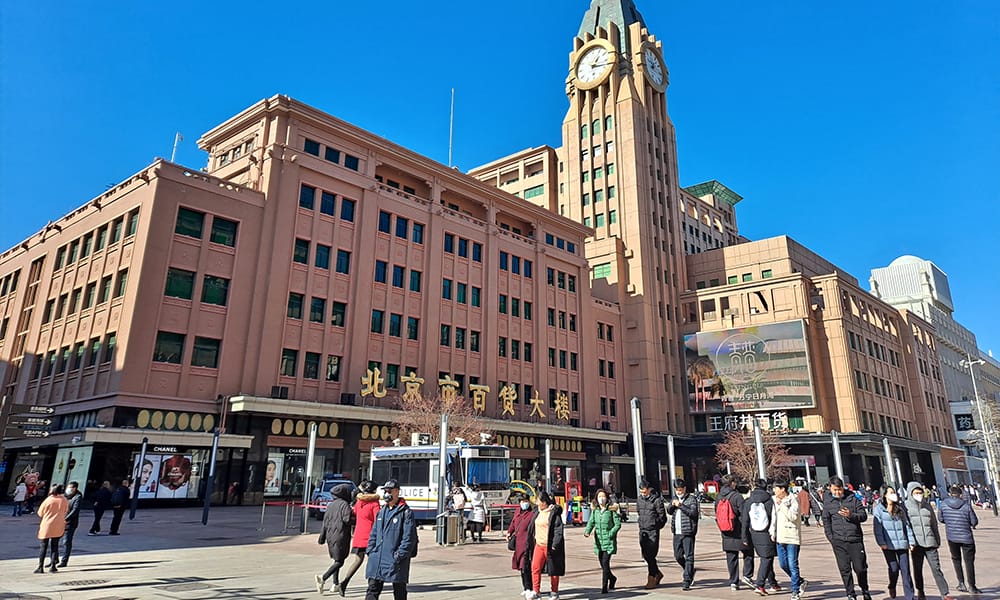
Wangfujing Street Beijing Night Market Walk – A Planner’s Guide to Food, History, and Midnight Culture
Beijing is often introduced through monumental icons. The Forbidden City. The Great Wall. Tiananmen Square. Yet the city’s most revealing stories often unfold somewhere far less ceremonial: on a pedestrian street filled with neon lights, sizzling skewers, and bookshops that stay open long after midnight.
That street is Wangfujing Street.
During the day it resembles an elegant shopping district. At night it becomes a living theatre of Beijing culture: food stalls, street conversations, and young locals drifting between bars and bookstores.
If you approach Wangfujing as a traveler, you may simply stroll, eat, and leave.
But if you approach it as a planner, the street becomes something deeper: a timeline of Beijing itself—from imperial residences to modern consumer culture.
Quick Summary Table – Wangfujing Street Beijing
| Category | Details |
|---|---|
| Location | Central Beijing |
| Historical Origin | Ming Dynasty royal residences |
| Name Meaning | “Prince’s Mansion Well Street” |
| Major Attractions | Shopping malls, bookstores, food street |
| Cultural Experience | Street food markets and nightlife |
| Famous Restaurant | Quanjude |
| Nearby Landmarks | Donghuamen, Xin Dong An Plaza |
| Best Time | Evening to late night |
| Known For | Night food street and luxury shopping |
How a Quiet Imperial Road Became Beijing’s Busiest Street
Long before luxury boutiques arrived, the area around Wangfujing belonged to royalty.
During the Ming Dynasty, ten princely residences lined a narrow road in central Beijing. Locals began referring to it simply as “Prince’s Mansion Street.”
The name evolved during the Qing Dynasty. A well used by these royal households became famous, and the street eventually adopted the name Wangfujing, meaning “the well of the prince’s mansions.”
It is a small detail. A well.
But that detail reveals something important about Beijing’s historical geography: water sources often determined where powerful families built their homes.
Centuries later, the well disappeared—but the name stayed.
The Government Transformation That Changed Everything
Between 1993 and 1999, Chinese authorities renovated Wangfujing and opened the district to international commerce.
The strategy was simple but ambitious: transform a historic street into a global shopping destination.
Today the area blends luxury brands with traditional Chinese retail culture. Walking through Wangfujing you will encounter:
-
Department stores
-
Craft shops
-
Large bookstores
-
International retail chains
-
Traditional snack stalls
Among the most interesting stops is the area around Xin Dong An Plaza, one of the commercial anchors of the district.
Another historic location nearby is Donghuamen, once connected to imperial palace entrances.
These places create an unusual spatial experience: medieval gates only a few minutes from glossy malls.
Daytime Wangfujing – Architecture, History, and Urban Rhythm
During daylight hours the street is calmer than many travelers expect.
Tour groups move between storefronts. Families browse craft stores. Street performers occasionally appear in pedestrian plazas.
It is also the best time to explore Beijing’s intellectual side. Wangfujing hosts one of the largest bookstores in China, a place where locals browse history books, travel writing, and modern Chinese literature.
Walking here in the afternoon gives a different impression of Beijing than the monumental government districts. It feels urban and personal.
Not monumental.
Human.
Nightfall – When the Street Becomes a Food Market
Everything changes after sunset.
A side street running perpendicular to Wangfujing transforms into a night food market.
Grills ignite.
Steam rises from noodle stalls.
Rows of skewers—meat, seafood, vegetables—line metal trays waiting for customers.
Some of the most recognizable street foods include:
-
Grilled meat skewers
-
Seafood skewers
-
Regional noodle dishes
-
Fruit coated in caramelized sugar
Visitors typically follow a simple routine:
choose → pay → eat immediately.
There are no formal dining rooms. No reservations.
Just smoke, laughter, and quick bites eaten while standing.
Food stalls often stay open until very late, which explains why many locals treat the street as an evening social zone rather than a dinner destination.
The Peking Duck Ritual
Among the restaurants around Wangfujing, one name repeatedly appears in guidebooks and local recommendations: Quanjude.
The restaurant is famous for Peking Duck, a dish that is less about eating and more about ceremony.
Professional chefs slice the roasted duck tableside. Staff demonstrate how to wrap thin pancakes with duck, sauce, and vegetables.
The process matters as much as the taste.
For many visitors, this is the first time they learn the correct Beijing method of eating the dish.
Shopping at Midnight
One of the strangest aspects of Wangfujing is how late the street stays alive.
Small gift stalls sell delicate souvenirs—miniature ornaments, traditional crafts, silk accessories.
These items often make choosing a souvenir unexpectedly difficult. The selection is enormous, and many objects are small, portable, and beautifully detailed.
The aesthetic is unmistakably Chinese.
Red lacquer.
Gold patterns.
Hand-painted motifs.
It feels like browsing inside a living craft museum.
After Midnight – Where Beijing’s Youth Gather
As the night deepens, another social layer appears.
Bars around Wangfujing begin filling with young locals.
Groups gather around tables playing dice games, talking loudly, and occasionally breaking into spontaneous singing. The atmosphere is casual and energetic—more social than stylish.
For travelers, this part of the night reveals a side of Beijing rarely shown in traditional travel brochures.
This is not imperial Beijing.
This is modern urban Beijing.
Things the Media Doesn’t Tell You
Most media descriptions portray Wangfujing as a shopping street.
That description is incomplete.
When planning a visit, several practical realities shape the experience.
1. The Street is Not Large
Despite its reputation, Wangfujing is surprisingly compact. You can walk the entire pedestrian section in under an hour.
Many visitors expect something the scale of Times Square. Instead, it feels closer to a historic European shopping boulevard.
2. Food Streets Can Change Quickly
Night market stalls evolve frequently. Some vendors disappear, others appear.
Travel planners who rely on outdated travel articles may arrive expecting stalls that no longer exist.
Checking recent vlogs or street walk videos is one of the easiest ways to see the current layout before visiting.
3. The Best Atmosphere is Late Evening
Between 7 PM and 10 PM the street reaches its most energetic moment.
Earlier in the evening it feels commercial. After midnight it becomes more local and bar-focused.
Timing your visit can completely change the experience.
4. Not Everything is “Authentic”
Some food stalls cater heavily to tourists. Locals often prefer restaurants a few streets away.
This does not make the experience less enjoyable—it simply means Wangfujing functions partly as a cultural showcase.
Community Perspective
Travel communities often describe Wangfujing with mixed emotions.
Some visitors love the energy of the night market.
Others prefer the quieter historical streets around Beijing.
But nearly everyone agrees on one thing: the street is impossible to ignore.
One travel blogger once described it this way:
“If you want to see modern Beijing in one evening—eat here, shop here, watch people here.”
That sentence captures the role Wangfujing plays in the city.
Not a monument.
A stage.
A Planner’s Walk Through Wangfujing – From Imperial Wells to Neon Night Markets.
Wangfujing street Beijing, Beijing night market, Wangfujing food street, Beijing street food, Peking duck Beijing, Quanjude restaurant Beijing, Beijing shopping street, Wangfujing travel guide, Beijing night street, Beijing food market, Wangfujing history, Beijing food stalls, Beijing walking street, Beijing nightlife district, Wangfujing market experience
