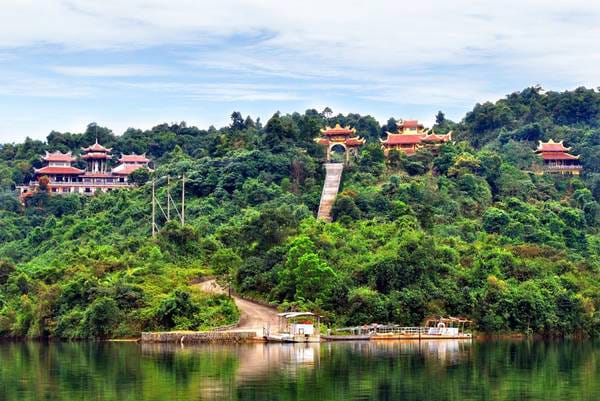
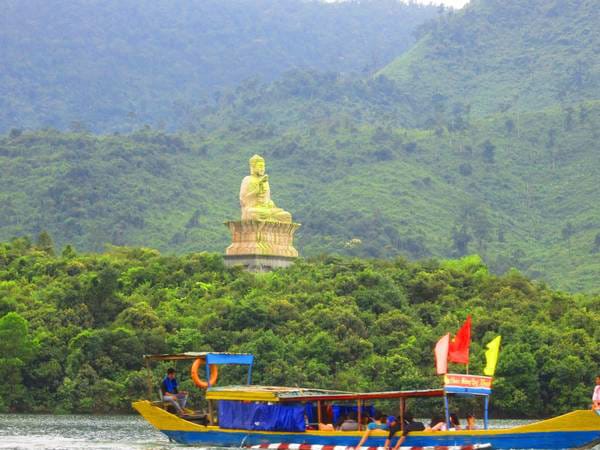
There are places that announce themselves with fireworks and slogans. Lang Co Bay does neither. It waits. It lies there, curved like a half smile between mountain and sea, and lets travelers discover it the old way, by arriving without armor and leaving with fewer certainties than they brought. Once favored by emperors seeking respite from heat and protocol, Lang Co Bay still carries that air of chosen retreat. Not hidden, not remote, just perfectly placed and oddly immune to hurry.
Lang Co Bay sits in central Vietnam, approximately thirty kilometers south of Da Nang and seventy kilometers north of Hue. Geography conspires kindly here. The bay rests between three UNESCO recognized heritage centers, Hue Imperial City, Hoi An Ancient Town, and My Son Sanctuary, all within a comfortable radius. This makes Lang Co not an endpoint but a hinge, a pause between histories, an inhalation before moving on. Or not moving on at all.
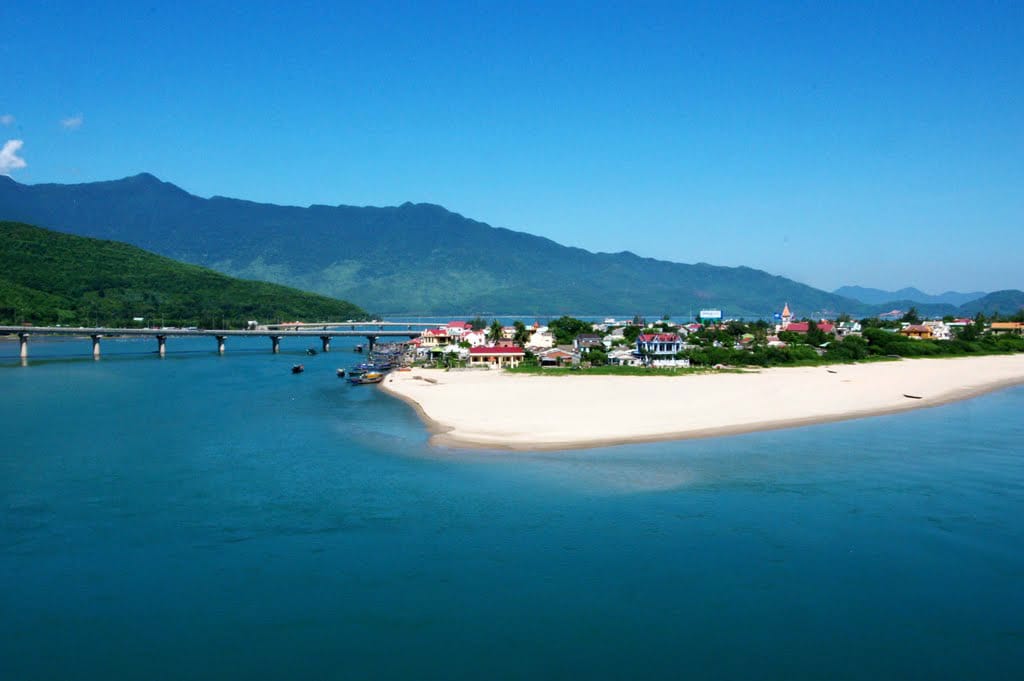
The bay itself has been repeatedly named among the most beautiful in the world, a designation that feels both accurate and faintly inadequate. Beauty here is not decorative. It is structural. A long sweep of pale sand. Water that shifts from jade to steel blue depending on mood and weather. The Truong Son Mountains rising abruptly behind, as if guarding the shoreline from excess.
Timing matters. Lang Co Bay is at its most persuasive from April through August, when skies open wide and the sea settles into a gentle rhythm. From September to November, rain visits more frequently and the water loses some clarity. December through March brings cooler air and colder currents. Still lovely, but restrained. Come in summer if you want to swim. Come in shoulder months if you want to think.
One of the defining pleasures of Lang Co is its water. Sheltered by the bay, the sea remains calm, almost courteous. The shoreline slopes gradually, inviting long wades before the water deepens. Families linger. Swimmers relax. The beach stretches wide enough for games, walks, and long silences. It feels forgiving, a quality not all beaches possess.
Architecture here respects the landscape. Resorts draw from Vietnamese heritage without slipping into pastiche. Angsana Lang Co, for example, blends modern design with traditional aesthetic cues. Clean lines soften into cultural references. Interiors favor balance over excess. Neutral palettes are punctuated by vivid accents, echoing the youthful energy of the brand without overwhelming the senses. The result feels current yet rooted, as though the building understands where it stands.
Angsana’s beachfront is one of its quiet triumphs. Because of its proximity to the bay, the sea remains gentle, almost tender. Water clarity surprises first time visitors. The sand, pale and generous, supports everything from early morning walks to late afternoon games. This is not a beach for spectacle. It is a beach for use.
Further along the curve of the bay lies Banyan Tree Lang Co, positioned beneath the dramatic rise of the Truong Son range. Here, the landscape asserts itself more boldly. A three kilometer crescent of sand arcs before the resort, facing open water while remaining sheltered. The design draws inspiration from Vietnam’s imperial past, referencing royal art and architectural motifs without slipping into nostalgia. It feels ceremonial in the best sense.
Accommodation at Banyan Tree Lang Co consists of private villas, some facing canals, others opening directly to the sea. Each is designed as a self contained retreat. After check in, the world contracts to a private terrace, a personal pool, and a horizon framed by mountains or water. Mornings unfold slowly. Afternoons stretch. Decisions become delightfully minor.
The spa experience here deserves attention. Banyan Tree Spa has built a global reputation, and its Lang Co incarnation lives up to it. Treatments use local Vietnamese ingredients, herbs, oils, textures drawn from regional traditions. Therapies feel intentional rather than indulgent. Time slows. Muscles remember their original purpose. You leave not transformed, but recalibrated.
For those who prefer movement to stillness, Lang Co provides options without pressure. Water sports range from kayaking to jet skiing, banana boats to fishing excursions. There are pools, tennis courts, off road explorations, and golf nearby. Activities feel available rather than mandatory. You choose. Or you do not.
Eating in Lang Co remains refreshingly unpretentious outside resort walls. One of the most beloved local spots is Be Den Restaurant, located near the foot of Hai Van Pass, roughly two and a half kilometers from the tunnel entrance. It is known for honest food, fair prices, and an unbeatable view of Lap An Lagoon. Meals are affordable. Seafood is fresh. If you order by the kilogram and ask for preparation, value improves further. Grilled lobster, split shrimp heads cooked into sour Central Vietnam style soup, steamed baby squid with ginger, tamarind crab. These are not styled dishes. They are satisfying ones.
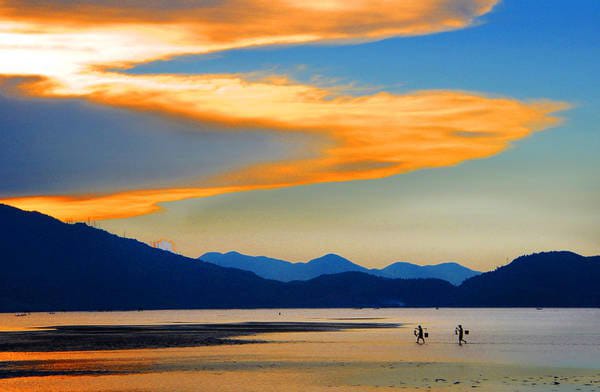
From Be Den, the lagoon reveals itself most dramatically at dusk. Water mirrors the sky. Oyster shells line the shallow bed, allowing you to wade far without sinking. The scene borders on unreal, especially when the light softens and the mountains recede into silhouette.
Smaller roadside eateries dot the area near Lang Co slope. Be Phuong, Thien Ly, Be Thinh. Names spoken casually, remembered fondly. Food here is simple, fresh, and best chosen after a brief look inside. Avoid highway oriented stops above the pass, designed for bus traffic and noise rather than pleasure.
Beyond the beach, Lang Co offers a surprising variety of excursions. A motorbike ride around Lap An Lagoon ranks high among them. One side water, one side mountain, the road tracing a narrow ribbon through reflected sky. Photos happen naturally. So do pauses.
Chan May Beach lies nearby, a flat crescent of white sand just three kilometers from National Highway One. Waves remain gentle. Space remains generous. There are no lifeguards or warning systems, so awareness matters, but the reward is a largely untouched bathing spot.
Hai Van Pass requires no introduction yet always benefits from repetition. Beginning at Hai Van Gate in Thua Thien Hue province and extending toward Bach Ma National Park, the pass covers less than sixty kilometers yet delivers continuous astonishment. Descending the pass, Lang Co Bay unfurls below, the tunnel entrance visible from above, a reminder of modern shortcuts through ancient terrain. Resist the shortcut. Take the road.
At the base of the pass, turn left onto Nguyen Van Road instead of returning directly to the highway. This detour reveals Lap An Lagoon in full, with seafood shacks built directly over water. Stop. Eat. Watch the light move.
Bach Ma National Park lies roughly thirty kilometers west of Lang Co. The climate remains temperate year round, rarely dropping below four degrees Celsius or rising above twenty six. Trails wind through forest. Waterfalls such as Do Quyen and Ngu Ho roar and whisper in turns. From Vong Hai Dai viewpoint, the panorama stretches across Chan May Bay and Cau Hai Lagoon. The scale resets you.
Lang Co Bay is not loud. It does not trade in exaggeration. It offers something rarer. Coherence. Beach, mountain, lagoon, food, rest, all aligned. You come thinking you will stay briefly. You stay longer than planned. You leave reluctantly.
This is not a destination you check off. It is one you absorb. And once absorbed, it has a way of resurfacing, uninvited, whenever you think about where to go next.
Lang Co Bay travel guide, Lang Co Bay tour, Lang Co beach resort, Lang Co Bay Vietnam travel, Lang Co luxury resort stay, Lang Co Bay itinerary, Lang Co seafood experience, Lang Co lagoon tour, Hai Van Pass travel, Bach Ma National Park trip, Lang Co beach holiday, Lang Co coastal journey, Lang Co Bay hotel booking, Central Vietnam beach travel, Lang Co Bay vacation