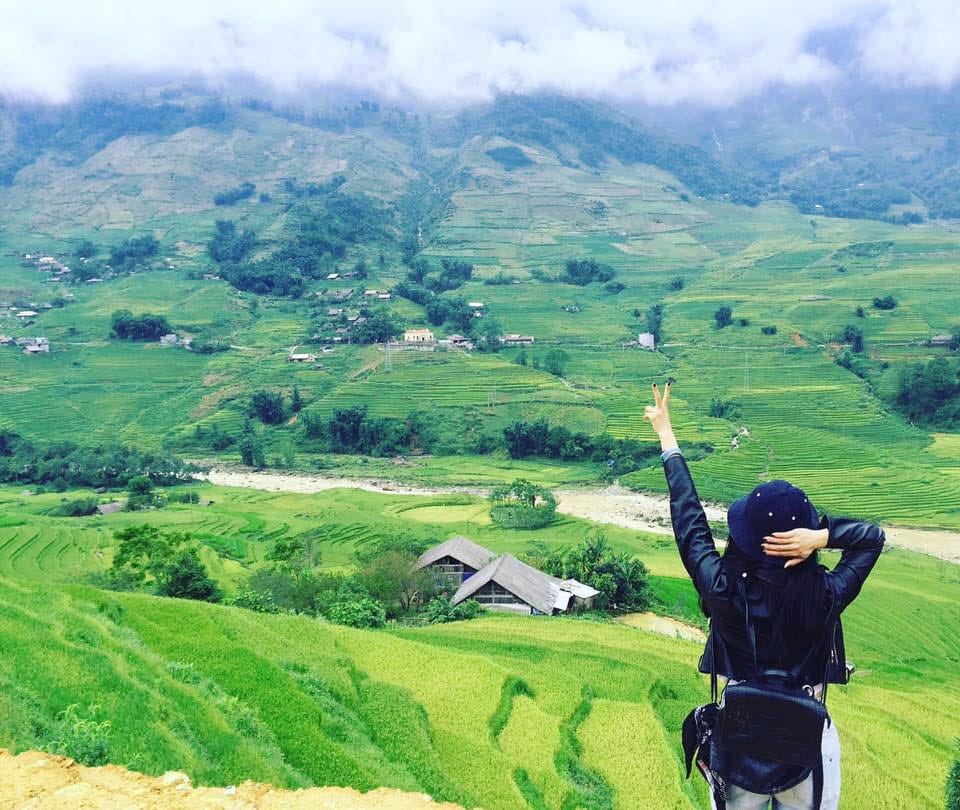
There are places that impress you, and there are places that quietly take possession of you. Sapa belongs firmly to the second category. Perched high in the northern mountains, it feels less like a town and more like a pause in the sentence of modern life. Between September and November, Sapa reaches its most persuasive form. The air turns lucid. The rice terraces glow like polished bronze. Clouds drift low enough to feel personal. This is when Sapa stops being scenery and starts becoming memory.
Travelers often arrive with lists. They leave with something less tidy. The ten destinations below are not merely stops on a map. They are thresholds, each offering a different texture of altitude, belief, effort, and reward.
Fansipan Mountain stands first, not only because of its height but because of its symbolism. Rising 3,143 meters above sea level in the Hoang Lien Son range, it is known as the Roof of Indochina. From Sapa town it appears deceptively close, a dark silhouette against shifting weather. Reaching the summit on foot is an undertaking that still demands respect. Six to seven days of trekking, guided by local Hmong or Dao experts, reveal dense forests, medicinal plants, rare birds, and the deep breathing of the mountains themselves. Every step feels earned.
For those who choose speed over endurance, the Fansipan cable car offers a different narrative. In fifteen minutes, you cross landscapes that once required days of sweat. Guinness recognized this route for its length and vertical difference, but numbers feel irrelevant when clouds part and the summit emerges. Bells ring. Prayer flags flutter. The view is not triumphant. It is humbling.
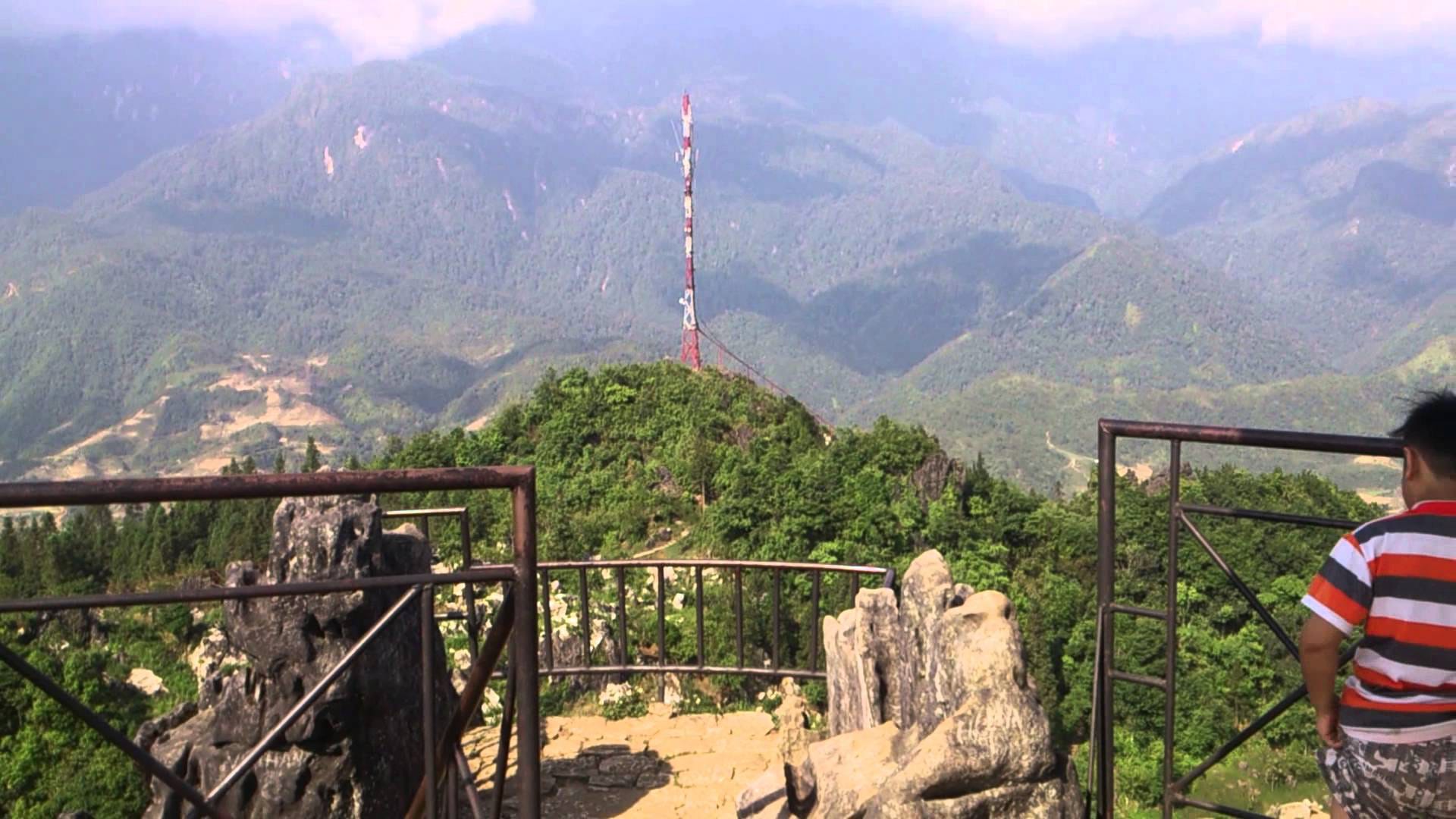
Ham Rong Mountain lies closer, almost domestic by comparison, yet it delivers one of the most theatrical panoramas in Sapa. A short walk from town leads you upward through manicured gardens, stone steps, and sudden openings where mist rushes in like an uninvited guest. From the summit, Sapa town, Muong Hoa Valley, Ta Phin, and distant villages surface and vanish in turns. Flowers blaze at your feet. Sky presses close. It feels unreal in the gentlest way.
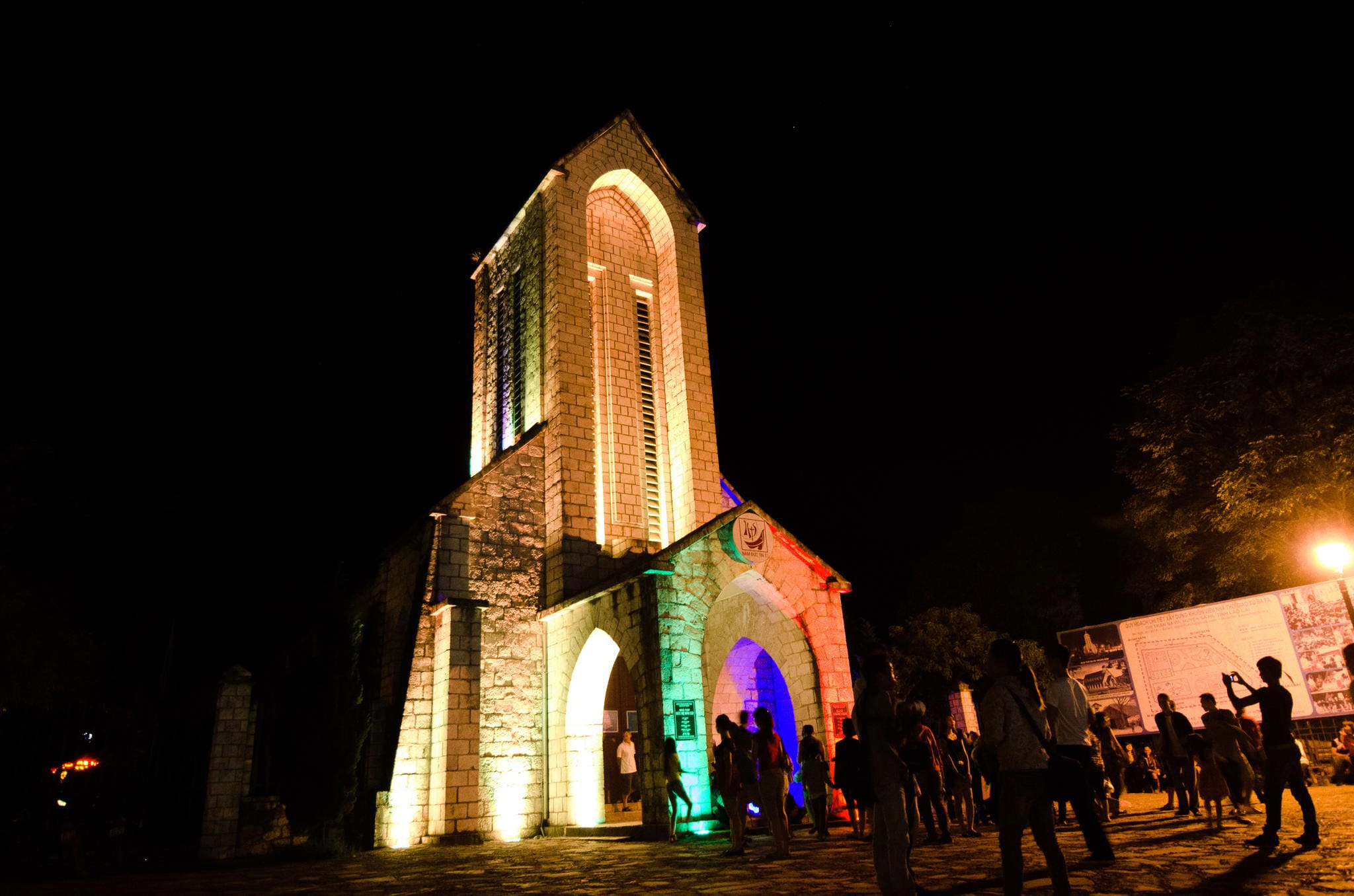
At the center of town stands Sapa Stone Church, a remnant of French colonial ambition built in 1895. Constructed entirely of stone, it has weathered wars, seasons, and reinvention. On weekends, the square fills with locals and travelers alike. Children play. Couples meet. Music drifts. The church no longer dominates. It observes.
Cat Cat Village lies only two kilometers away, yet it feels like a different cadence of life. This long established Hmong village preserves traditional crafts such as indigo dyeing, weaving, and embroidery. Waterwheels turn slowly. Wooden houses cling to slopes. Though Cat Cat has been developed for visitors, traces of everyday life remain visible if you look beyond the main path. The sound of looms. The smell of wood smoke. A woman rinsing fabric in cold water without hurry.
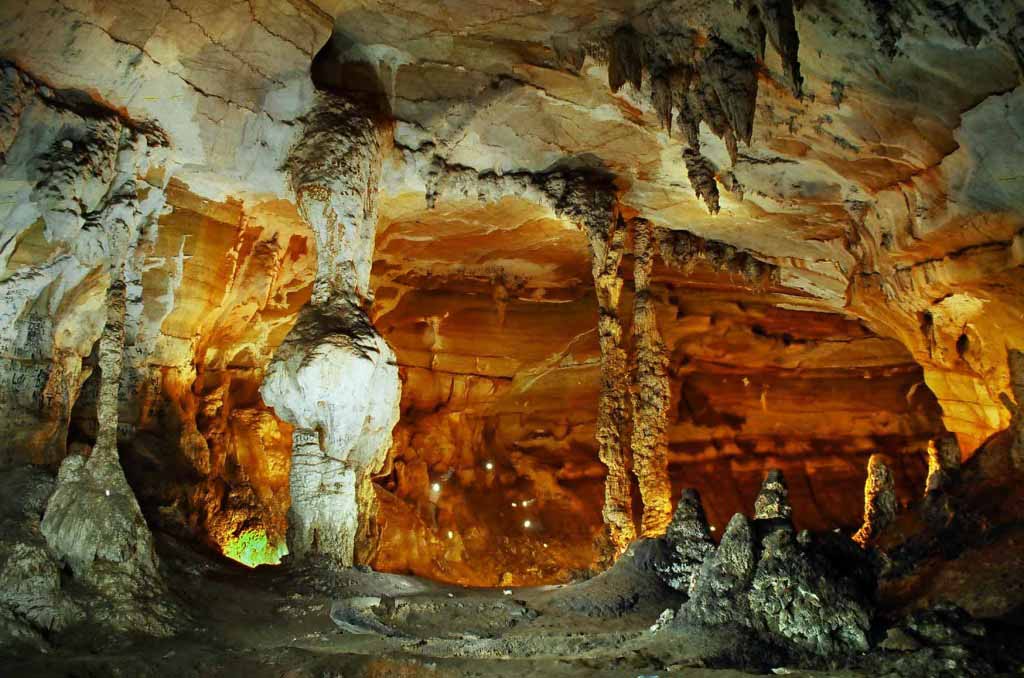
Ta Phin Village stretches farther east, seventeen kilometers from Sapa, and rewards the journey with depth rather than convenience. Home to the Red Dao community, Ta Phin is known for its brocade craftsmanship and herbal traditions. The nearby Ta Phin Cave reveals stalactites shaped like dancers, forests, and imagined landscapes. Light inside the cave behaves strangely, catching edges and leaving corners untouched. The village itself feels quieter, more inward looking. This is a place to listen.
Beyond these lie other villages that complete the larger story of Sapa. Ta Van, where Hmong, Giay, Tay, and Dao communities intersect. Y Linh Ho, Lao Chai, Ban Ho, each threaded along Muong Hoa Stream. Walking between them, you cross suspension bridges, terraced fields, and conversations that require smiles more than language. These are not attractions. They are continuities.
Muong Hoa Valley deserves its own moment. Eight kilometers southeast of Sapa, it opens into a wide basin carved by water and time. Here, ancient carved stones lie scattered among rice terraces. Hundreds of sandstone slabs bear mysterious symbols whose meanings remain unresolved. Scholars debate. Locals accept. The carvings coexist with daily farming, children walking to school, buffalo moving slowly through mud. A small fee grants access, but the valley itself feels beyond transaction.
Silver Waterfall announces itself before it appears. Twelve kilometers west of town, water plunges over two hundred meters into a valley along the O Quy Ho Pass. In spring, the flow softens, revealing rock instead of roar. Continue three kilometers further and the pass summit opens wide. Fansipan looms. Roads coil below. Wind carries the sound of nothing in particular.
The Heaven Gate sits along the Tram Ton Pass, eighteen kilometers north of Sapa. The road twists, climbs, narrows. At the summit, the world drops away. Valleys stretch. Fields pattern the earth. Far below, Silver Waterfall threads downward. Here, Fansipan asserts its scale. Standing at Heaven Gate, you feel both small and extraordinarily awake.
Tien Cave offers a different mythology. Reached by boat along the Chay River near Bao Nhai, the journey passes old citadel ruins and steep riverbanks. The cave complex, often called a miniature Halong Bay, is linked to legends of beauty, blessings, and renewal. Morning light transforms the water into silver glass. Visitors swim, wander, hope.
Coc San, near Bat Xat district, remains one of the least altered landscapes near Sapa. A narrow dirt road leads to a network of waterfalls and caves hidden beneath dense foliage. Water crashes, then disappears into caverns beneath each fall. The terrain feels raw, unarranged, demanding attention. This is Sapa without polish. Without explanation.
Staying in Sapa completes the experience. Boutique hotels cling to hillsides with panoramic views. Family run homestays offer shared meals, thick blankets, and stories after dark. Benefits are simple yet persuasive. Warm rooms in cold air. Early breakfasts before mist lifts. Hosts who know when to talk and when to leave you alone.
A well designed Sapa tour balances structure with freedom. Mornings for movement. Afternoons for wandering. Evenings for quiet meals and early sleep. Prices remain accessible. Food is hearty. Grilled meats, mountain vegetables, hot broths. Sleep comes easily at altitude.
Sapa does not demand admiration. It accumulates it. Slowly. Persistently. You arrive curious. You leave altered. And somewhere between the clouds and the stone paths, you begin planning a return before you have fully departed.
Sapa travel guide, Sapa tour, Sapa attractions, Fansipan Mountain tour, Sapa villages, Muong Hoa Valley, Sapa itinerary, Sapa hotel stay, Sapa trekking experience, Sapa mountain travel, Sapa sightseeing, Sapa cultural tour, O Quy Ho Pass, Sapa nature journey, Sapa travel experience